Views: 0 Author: Site Editor Publish Time: 2026-05-30 Origin: Site
Small packaging errors become expensive very quickly in Seasoning powder filling. One weak seal, one unstable fill weight, or one slow changeover can turn a promising product into a production headache.
The phrase Coffee Capsule Packaging Solution may sound narrow, but the same buying logic often applies across capsule, cup, powder, liquid, and automatic packaging projects. This article looks at Powder Packaging Machine performance from the plant floor: filling behavior, seal reliability, cleaning access, operator control, and the point where a line stops being a simple machine and becomes a production system.
Seasoning powder creates a very practical problem: it flows when it wants to, then bridges, clings, or dusts when humidity, particle size, or oil content changes. A machine that works well for one dry powder may need testing before it handles chili blends, soup seasoning, spice mixes, or low-dose flavor packs.
For portion seasoning, accuracy matters twice. Underfilling can damage customer trust, while overfilling quietly destroys margin across thousands of packs. The filling system should support controlled dosing, dust management, and inspection that catches unstable fills before they reach cartons.
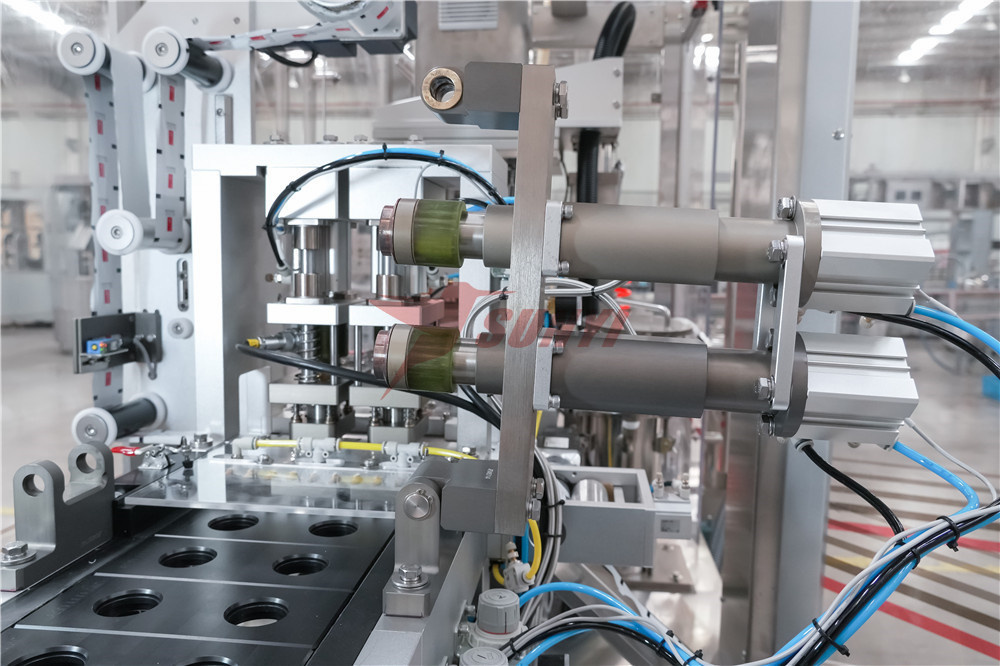
For this article, the matched internal product reference is the powder-capable SKP-2 packaging machine for seasoning filling projects. The page is used because it gives the closest official machine reference for powder packaging machine planning around Seasoning powder filling.
That match still needs real sample testing. Packaging buyers should send actual cups, lids, film, powder or liquid samples, and required fill weights before freezing a line design. This is especially true when viscosity, particle size, cup diameter, or sealing material may change from one SKU to another.
Note: Product-page parameters are useful for screening, but final configuration should be confirmed against samples, packaging drawings, and factory layout.
The article does not invent speed, weight, filling range, or machine size. The following points come from the official Sunyi product page or company pages and are used as the technical anchor for the content.
The product page lists a servo auger filling system and powder materials such as matcha powder, tea powder, probiotics, and soluble powder.
The same page lists 100 cups per minute, 0–50 g filling weight, and vacuum feeding.
It also describes quality inspection functions such as camera-based lid inspection and inline weight checking.
Item | Verified Information |
|---|---|
Model | SKP-2 |
Brand | SUNYI |
Filling materials | Ground coffee powder, tea powder, matcha powder, probiotics, soluble powder |
Capacity | 100 cups/min |
Filling method | Metering pump / servo auger filling system |
Filling accuracy | ±1%–5% |
Filling weight | 0–50 g |
Feeding method | Vacuum feeder |
Power supply | 3Phase 380V / AC220V, 1P 50/60HZ 3.5KW |
Inspection | Camera-based lid inspection and inline weight checking |
These values do not replace a quotation sheet. They help buyers decide whether the machine family deserves a closer technical discussion. In practice, final speed may depend on cup size, filling volume, product behavior, lid material, operator skill, and upstream or downstream equipment.
Many buyers first ask about maximum capacity. That is understandable, but it is not always the most useful question. A machine that runs slightly slower with stable dosing may beat a faster line that stops often for cup jams, product splash, film drift, or cleaning delays.
For Seasoning powder filling, the real target is usable output. Usable output means saleable packs at the end of a shift, not just theoretical cycles per minute. Operators care about how often they need to intervene. Quality teams care about dose variation, seal defects, and traceable checks. Maintenance teams care about access, spare parts, and predictable wear.
The SKP-2 High Speed Dolce Gusto Matcha Capsule Two Lanes Single Serve Cup Filling Sealing Machine gives buyers a starting point for that conversation. Its listed features and parameters show where it may fit: controlled filling, sealing, detection or inspection elements, and a structure designed for food packaging work. The right question is whether those features match the target pack format.
A seal does more than close a cup or capsule. It protects aroma, freshness, hygiene, and the customer experience. A weak seal can leak during transport. A dirty rim can reduce adhesion. A misaligned film can create an ugly pack even when the fill is accurate.
That is why buyers should look closely at how the machine handles cup placement, film feeding, lid detection, sealing temperature, sealing pressure, and discharge. If the machine will package Seasoning powder filling, rim control and film behavior deserve attention during the factory test. A good test should include repeated starts, pauses, restarts, and normal operator adjustments.
One production manager may see changeover as a short task. The accounting team may see something different: lost minutes, wasted cups, extra sanitation labor, and product waiting in bins. For brands that run many SKUs, mold change, cleaning access, recipe settings, and film adjustment can shape the real cost of ownership.
Sunyi product pages often refer to flexibility, mold change, or multi-format applications. Buyers should turn those claims into practical questions. How long does the changeover take? Which parts need tools? Can operators clean contact areas quickly? Does the control system store settings? What checks prevent a wrong film or cup from reaching the sealing station?
Before choosing any powder packaging machine, buyers should study the product. Is it liquid, creamy, granular, dusty, sticky, foamy, oily, or temperature sensitive? Does it separate while waiting in a hopper or balance tank? Does it stain the sealing surface? These questions decide the filling method more than the product name alone.
For Seasoning powder filling, sample testing should recreate normal production conditions. A short demo with clean water or one easy powder is not enough. The supplier should test the actual product, packaging materials, and target fill weight. If the formula has particles, oil, sugar, dairy solids, or powder blends, they should be included in the test.
Cups, capsules, lids, rolls of film, and pre-cut foils all have small tolerances. A few millimeters can matter. Poor stacking can affect cup dropping. Film curl can affect cutting and sealing. A lid that looks fine by hand may behave differently at high speed.
A practical buyer will send packaging samples early. The machine supplier can then check cup diameter, height, rim shape, material stiffness, lid style, and sealing behavior. This avoids a painful problem: buying a machine first and redesigning the pack later because the chosen cup cannot run reliably.
The best filling and sealing machine still needs a good layout. Operators need room to load cups, film, product, and cleaning tools. Technicians need safe access to electrical and pneumatic areas. Downstream conveyors, cartoning machines, case packers, and checkweighers should not create bottlenecks.
For dry powder portion packaging line, it is wise to map the full flow from raw material handling to finished-case output. The filling station may be the core, but the line succeeds only when feeding, sealing, inspection, coding, labeling, carton packing, and storage work together.
Quality checks should not live only in a lab notebook. Operators need simple, repeatable checks at the machine. They may check fill weight, seal peel strength, film alignment, cup cleanliness, printed code readability, and product appearance. The machine should make these checks easier, not harder.
A good routine often includes first-article checks, scheduled in-process checks, and final checks before palletizing. When the product is sensitive, buyers may also add oxygen control, nitrogen flushing, or special hygiene controls. Those items must be discussed before the quotation is finalized.
The table below turns a general buying idea into practical engineering checks. It is written for seasoning factories, condiment brands, nutrition powder producers, and portion-pack co-packers who need a machine that can survive daily work, not just a smooth showroom run.
Selection Factor | What to Check |
|---|---|
Target product | Test the real Seasoning powder filling formula, not a substitute. |
Container fit | Confirm cup or capsule size, rim profile, height, and material stiffness. |
Filling system | Match the dosing method to viscosity, powder flow, particle content, or foam risk. |
Seal method | Confirm film, foil, lid, temperature, pressure, and peel behavior. |
Cleaning access | Check how operators reach product-contact parts during real shifts. |
Inspection | Review cup detection, lid detection, weight checking, or camera checks where needed. |
Output target | Compare nominal capacity with actual usable output after changeover and cleaning. |
Line integration | Plan conveyors, coding, cartoning, case packing, and palletizing early. |
Service support | Clarify training, spare parts, remote support, warranty, and commissioning duties. |
Some teams try to choose the cheapest machine that appears to meet the output target. We see a different pattern in real packaging projects. The lower-risk purchase is usually the line that gives clear answers about samples, changeover, hygiene, spare parts, and acceptance testing.
The first mistake is treating the product word as the technical specification. “Powder,” “liquid,” “yogurt,” or “pet food” is only the beginning. The same product category can behave very differently across recipes. A thick yogurt and a drinkable yogurt do not fill the same way. A dry spice blend and a slightly oily seasoning may need different hopper handling.
Sample testing gives both buyer and supplier a shared picture. It reveals splash, dust, bridging, poor cup drop, rim contamination, seal wrinkling, or product sticking. That is far better than discovering those issues after the machine arrives.
Many failed packaging projects are not caused by the filling pump or auger. They are caused by packaging materials that do not behave consistently. Film may stretch. Foil may curl. Pre-cut lids may vary. Cups may stick in the stack. The machine can only do so much if materials are unstable.
For Seasoning powder filling, buyers should request material recommendations and test enough samples. They should also ask whether alternative cup suppliers or lid materials have been used before. This does not lock the buyer into one supplier, but it gives the project a safer starting point.
Cleaning time is part of production time. A line that is hard to wash, inspect, or reassemble will lose output every week. For food products, cleaning also protects brand reputation. Poor access can lead to residue, odor, cross-contamination, or operator shortcuts.
Maintenance deserves the same attention. Sensors, sealing jaws, vacuum parts, pumps, augers, conveyors, and pneumatic components should be reachable. The buyer should ask which parts are consumables, what spare parts are recommended, and how remote troubleshooting works.
A cup or capsule is rarely the final unit. It may go into cartons, trays, bags, cases, or multipacks. If the downstream equipment cannot keep up, the filling line will stop anyway. This is especially relevant for brands that plan retail multipacks or e-commerce cartons.
Sunyi’s broader site presents automatic filling, sealing, cartoning, and case packing as part of its packaging solution capability. That matters because many buyers eventually need more than one machine. Even when the first order is only a filler-sealer, the future line should be considered.
Seasoning powder is not a single material. Chili powder, curry blends, soup bases, vegetable seasoning, salt-heavy mixes, and oily spice blends all behave differently. Some flow easily. Others bridge inside a hopper or cling to the filling path.
The matched Sunyi product page is a powder-capable capsule machine page because it lists dry powder materials, a servo auger filling system, a vacuum feeder, and inline checking features. For seasoning applications, this makes it a useful official reference, though the final machine setup must be confirmed by testing the exact seasoning blend.
Accuracy is not only a quality requirement. It is a margin issue. A small overfill looks harmless until it repeats across hundreds of thousands of units. A small underfill can trigger complaints. Good powder packaging design looks at dosing repeatability, dust control, product loss, and cleaning between flavors.
Flavor cross-contact also matters. A garlic seasoning run after a sweet powder can create odor transfer if cleaning is weak. Operators need access to the hopper, dosing section, product-contact parts, and collection areas where fine particles may settle.
Saleable output is the number that matters most. It removes defective packs, start-up waste, samples, and rejected units from the picture. If a line reaches a high speed but produces too many rejects, the factory does not gain much.
For Seasoning powder filling, saleable output should be checked by shift, by product, and by packaging material lot. A sudden drop may point to product temperature, cup quality, film tension, operator habits, or a worn component. Tracking it early helps the team find patterns before they become normal.
Do not count all defects as one number. Separate them. Record underfill, overfill, missing cup, bad lid, weak seal, product splash, film misalignment, poor code, crushed cup, and downstream jam. This turns complaints into engineering data.
When reject reasons are visible, the team can fix the largest source first. Maybe the filling system is not the problem. Maybe cups stick in storage. Maybe the lid roll is unstable. Maybe cleaning takes too long and operators rush reassembly. Good data prevents guessing.
Changeover time should include cleaning, tooling adjustment, recipe selection, film loading, first-article checks, and the first stable run. Some suppliers quote changeover as the mechanical mold swap only. A factory should measure the whole event.
For multi-SKU brands, the difference between a 30-minute changeover and a 90-minute changeover can decide how many products can be run in one week. That is why changeover deserves attention before the order, not after installation.
A good purchase order should say more than model and price. It should define target product, container, fill weight, output range, sealing method, available utilities, and test criteria. This protects both buyer and supplier.
Acceptance testing can include repeated weight checks, seal checks, cup appearance checks, film alignment, cleaning demonstration, recipe change, and safe stop and restart. For Seasoning powder filling, include the most difficult recipe, not only the easiest one.
Training should not only show which button starts the machine. Operators should learn what a weak seal looks like, what causes fill drift, how to clean contact parts, how to load cups correctly, and when to call maintenance.
Small operator habits have a large effect on packaging quality. A line that is technically capable can still produce poor packs when operators do not understand the process. The supplier should provide practical training, manuals, and remote help when needed.
Spare parts planning is boring until a line stops. Then it becomes urgent. Buyers should ask for a recommended spare parts list, lead times, and the parts most likely to wear during normal use.
Common planning areas include sealing parts, sensors, suction cups, belts, pumps, auger-related parts, pneumatic components, and film-handling items. The exact list depends on the machine configuration. It should be agreed before shipment.
A packaging machine is not a catalog item in the same way as a spare motor or a sensor. It has to be configured around the product, the container, the lid, the film, and the factory. A supplier with packaging experience can reduce the number of surprises during design, testing, commissioning, and training.
Sunyi’s company pages describe the business as an intelligent packaging equipment manufacturer focused on filling, sealing, cartoning, and related automation for FMCG sectors. The public materials also reference food, dairy, condiments, pet food, health, cosmetics, tea, coffee, milk powder, and solid beverage applications.
For seasoning factories, condiment brands, nutrition powder producers, and portion-pack co-packers, this broader background is useful. A buyer may begin with a single powder packaging machine, then later need cup counting, cartoning, case packing, or a more automated line. It is easier to plan that future path when the supplier understands more than one station.
Still, buyers should be clear in the inquiry. Send drawings, product samples, desired speed, electrical standards, available floor space, and sanitation requirements. Ask for a layout, acceptance criteria, and a clear list of what is included. The more specific the early discussion is, the fewer expensive surprises appear later.
The best powder packaging machine depends on the product sample, container, fill weight, sealing material, and output target. The matched Sunyi page in this article gives a practical reference, but final selection should follow sample testing.
It may handle multiple products when the filling method, molds, and cleaning design support changeover. Buyers should confirm tooling, contact parts, recipe settings, and sample test results before relying on one line for many SKUs.
Buyers should run the real product at the target weight, record repeated samples, review average weight and variation, and test after starts, stops, and normal speed changes.
Sealing protects freshness, prevents leakage, improves shelf appearance, and reduces complaints. A strong filling machine still needs correct film, temperature, pressure, and cup-rim control.
Send product samples, container drawings, lid or film samples, fill weight, target speed, factory layout, power requirements, and cleaning expectations. It saves time for both buyer and supplier.
No. Machine speed may change with product behavior, cup size, filling volume, sealing material, inspection needs, and downstream equipment. Use the listed speed as a screening point, not a final promise.
Prepare operators, spare parts, cleaning routines, packaging material standards, and acceptance tests before shipment. Small details decided early often save many hours after commissioning.
No. The product URL is an internal reference for the article and a starting point for discussion. A real proposal should include samples, layout, optional systems, and confirmed specifications.
A useful powder packaging machine decision starts with the product and ends with the finished pack. For Seasoning powder filling, buyers should look beyond headline speed and ask how the line handles dosing, sealing, cleaning, material changes, inspection, and downstream integration.
The official Sunyi product page linked above provides a real reference for SKP-2 High Speed Dolce Gusto Matcha Capsule Two Lanes Single Serve Cup Filling Sealing Machine. It gives verified machine details that can support early evaluation. From there, the smart move is simple: test real samples, confirm real packaging materials, and turn every assumption into an acceptance point before production starts.
For companies building a reliable packaging line, Sunyi can be considered as a practical machinery partner for filling, sealing, and related automation discussions. The best result comes when both sides define the product, the pack, and the production goal clearly from the beginning.