
Views: 0 Author: Site Editor Publish Time: 2026-01-12 Origin: Site
Coffee has become a daily essential for millions worldwide. As demand for convenience rises, coffee capsules offer a quick, hassle-free brewing experience. However, the process behind these capsules—filling, sealing, and packaging—is carried out by specialized machines.
These coffee capsule filling machines ensure precision, freshness, and high-speed production. They are vital for maintaining product quality and consistency. In this article, we will explore how coffee capsule filling machines work, focusing on their key mechanisms and automation processes.
A coffee capsule filling machine is an automated system designed to fill empty coffee capsules with ground coffee, seal them tightly, and prepare them for distribution. These machines are designed for high-volume production, ensuring that each capsule is filled with the precise amount of coffee to maintain consistency in every cup brewed.
These machines are designed to handle a wide variety of capsule types, ensuring flexibility and adaptability for different brands and consumer preferences:
● Nespresso: Known for their convenience and wide selection of coffee blends, Nespresso capsules are commonly used in single-serve coffee machines. These machines are specifically built to handle the precise size and design of Nespresso pods.
● K-Cups: Popular in North America, K-Cups offer an easy brewing method for coffee, tea, and other beverages. The machines are well-equipped to fill and seal K-Cups, offering consistent quality and efficiency.
● Other Formats: Coffee capsule filling machines can also be adapted to process a range of other formats, such as Lavazza, Dolce Gusto, and proprietary capsule types. The machines can be configured to meet specific product requirements, accommodating different shapes, sizes, and sealing methods.
This versatility ensures that coffee manufacturers can produce a broad range of capsules, catering to various markets and consumer demands.
The primary function of a coffee capsule filling machine is to automate the process of filling capsules with coffee grounds, sealing them, and ensuring quality control. The machine’s efficiency helps manufacturers maintain product consistency while optimizing production speed.
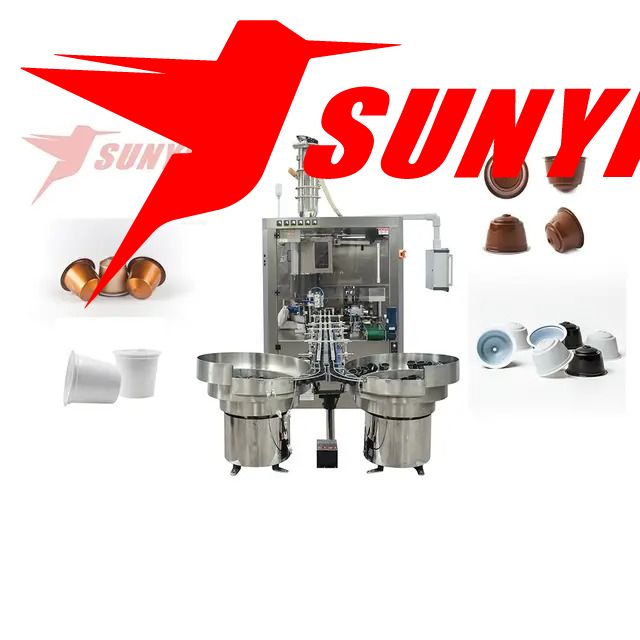
Coffee capsule filling machines operate through a series of precise steps, ensuring that each capsule is filled, sealed, and ready for use. Here’s a more detailed look at each stage:
The process begins with capsules being loaded into the machine’s hopper. The hopper feeds the capsules into the system, where specialized feeders and orientors align them. These components ensure that each capsule is positioned correctly for the next step, preventing misalignment and errors in the process.
For two-piece capsules, such as those used in Nespresso or K-Cups, the machine uses a vacuum system or mechanical force to separate the body from the lid. This crucial step ensures that the two parts of the capsule are ready for filling and sealing, eliminating the chance of sealing the wrong part.
After the capsule is prepared, the machine begins the filling process. It accurately measures and dispenses ground coffee into each capsule. This is done using auger fillers or dosing systems, which guarantee consistency and precision in every capsule, ensuring that the right amount of coffee is used for optimal brewing.
To optimize the brewing process and ensure proper extraction, the ground coffee is tamped (compressed). This helps achieve a uniform and compact coffee bed. Additionally, some machines add an inner filter to the capsule, helping to maintain flavor consistency and prevent coffee grounds from spilling out during brewing.
Once the capsule is filled and tamped, the next step is sealing. A foil lid is placed over the filled capsule, and heat is applied to create a strong, airtight seal. This step is critical as it prevents air, moisture, or contaminants from affecting the freshness and flavor of the coffee, ensuring it’s preserved until the capsule is used.
The power of coffee capsule filling machines lies in their ability to operate automatically and with great efficiency. These machines are designed to maximize productivity while maintaining high standards of quality.
At the heart of most modern coffee capsule filling machines is the Programmable Logic Controller (PLC). This automated system controls each step of the process, from capsule feeding to sealing, ensuring everything runs smoothly and efficiently.
These machines can produce hundreds or even thousands of capsules per minute. The automation of each stage, from filling to sealing, significantly increases production capacity compared to manual methods, meeting the growing demand for coffee capsules.
Automation helps maintain the precise amount of coffee in each capsule, ensuring that every brew delivers the same high-quality experience. This consistency is vital for building customer loyalty and trust in a brand.
Aspect | Key Feature |
PLC | Automates and controls every process step. |
High-Speed Production | Produces hundreds to thousands of capsules per minute. |
Precision & Consistency | Ensures uniform coffee filling for each capsule. |
A coffee capsule filling machine is a complex system composed of several interconnected components that work in harmony to complete the filling process efficiently.
The hopper and conveyor system store and feed empty capsules into the machine. These devices ensure that capsules are moved smoothly and efficiently, reducing downtime during production.
The powder feeding system controls the amount of ground coffee fed into the capsules. Auger fillers or dosing systems precisely measure the required dose to ensure consistency.
The filling mechanism dispenses the coffee into each capsule, while the sealing system ensures that the foil lid is securely attached, maintaining the integrity of the product.
Modern coffee capsule filling machines incorporate sensors and cameras to inspect each capsule for defects, such as improper filling or faulty seals. Defective capsules are automatically rejected, ensuring that only high-quality products move forward in the production line.
To keep the machine running smoothly, many systems include integrated cleaning features. These ensure that any coffee residue or dust is removed between cycles, maintaining the machine's hygiene and prolonging its lifespan.
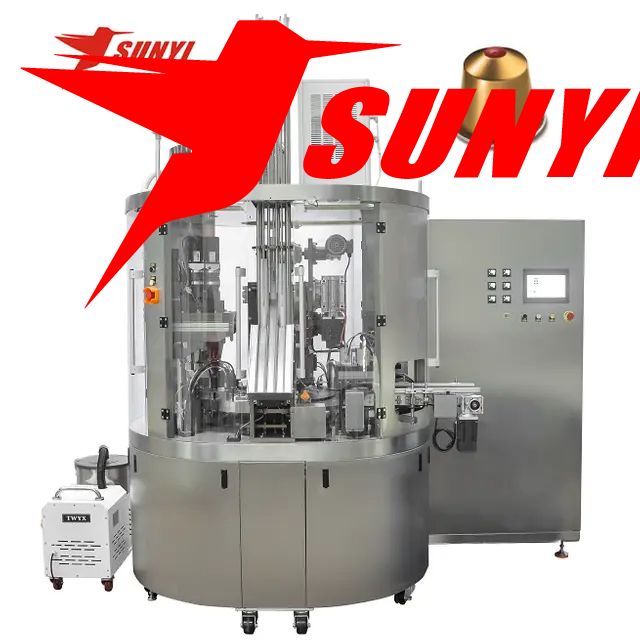
The ability to produce capsules at high speed is one of the key advantages of automated machines. Unlike manual processes, where production is limited by human resources, filling machines can produce large quantities in a short amount of time, increasing overall productivity.
Automation ensures that every capsule is filled with the same amount of coffee, offering a consistent flavor profile in each cup brewed. This level of quality control is difficult to achieve manually.
By reducing the need for manual labor and minimizing errors, coffee capsule filling machines help companies save on costs. The efficiency of these machines can result in higher profits and reduced operational expenses.
Advantage | Key Benefit |
Increased Efficiency | High-speed production increases overall productivity. |
Consistency in Quality | Ensures uniform coffee filling for consistent flavor. |
Cost-Effectiveness | Reduces manual labor and operational costs. |
Large-scale coffee manufacturers rely on these machines to meet the increasing demand for coffee capsules. Automation allows them to scale production while maintaining product quality.
Even small-scale producers can benefit from coffee capsule filling machines, which allow them to maintain the same level of quality and efficiency as larger companies, helping them compete in the market.
These machines can also be adapted to fill other types of products, such as tea or herbal blends. Their versatility makes them a valuable investment for businesses looking to diversify their offerings.
Application | Function |
Commercial Coffee Manufacturers | Scales production while ensuring quality. |
Private Labeling and Small-Scale Producers | Maintains quality and efficiency for smaller producers. |
Adaptability to Other Products | Can be adapted for filling tea or herbal blends. |
Coffee capsule filling machines are vital for the coffee industry, automating filling and sealing to ensure consistency and freshness. With advanced technology like PLC systems, these machines help manufacturers meet the rising demand for high-quality capsules. As the industry evolves, sustainability and automation will continue to shape production. Jiangsu SunYi Machinery Co., Ltd. provides top-tier coffee capsule filling machines that enhance efficiency and product quality, offering valuable solutions for manufacturers in the coffee sector.
A: A Coffee Capsule Filling Machine automates the process of filling empty coffee capsules with ground coffee, sealing them, and ensuring consistency and freshness. It plays a crucial role in high-volume coffee production.
A: The machine feeds empty capsules into the system, fills them with ground coffee, tamps the coffee, adds filters if needed, seals the capsules, and performs quality checks, all automatically.
A: Coffee Capsule Filling Machines ensure precise and consistent filling, maintain product freshness, and increase production efficiency, meeting the growing demand for convenient, high-quality coffee.
A: The cost varies depending on the machine's capacity, features, and automation level. Typically, more advanced machines with higher production rates will have a higher price tag.
A: These machines improve production speed, ensure consistency in coffee quality, reduce labor costs, and enhance overall efficiency, making them indispensable for large-scale coffee manufacturers.
A: Yes, most Coffee Capsule Filling Machines can be adjusted to process various capsule types, such as Nespresso or K-Cups, making them versatile for different coffee brands.


