Views: 0 Author: Site Editor Publish Time: 2026-09-18 Origin: Site
The packaging industry is changing quickly. Experts expect the market to grow from USD 10.06 billion in 2024 to USD 16.51 billion by 2035, which is a yearly growth rate of 4.60%. This growth points to big chances for businesses. Still, producers face ongoing problems: not enough workers, wasted product, and more pressure to use eco-friendly methods.
Nearly 25% of food and drink makers have seen their teams get smaller recently. Because of this, 22% plan to spend more on automation. This article looks at five key trends in coffee & tea filling machine technology: automation, precision, sustainability, flexibility, and IoT integration. These newest tech advances fix real issues in daily work. For coffee and tea makers, using this new technology means less waste, steady quality, and an edge over rivals. Knowing these packaging tech trends helps companies choose smart equipment that boosts efficiency and profits.
Using cobots and AGVs for automation cuts the need for workers and boosts production without adding more shifts.
Precision gravimetric filling can reduce product giveaway by up to 1.2% each year for costly coffee beans.
Energy-efficient servo drives cut electricity use by 10-35%, which reduces the carbon footprint.
Multi-format machines switch over fast, so a single line can handle many different products.
IoT sensors help with predictive maintenance, which avoids sudden downtime and lowers repair costs.
Sustainable designs cut waste by using light, recyclable materials and nitrogen flushing.
Software recipe management helps keep quality steady and makes it quick to switch between different product types.
Automation is the biggest force changing how coffee and tea filling machines work today. Many producers do not have enough workers, and wages keep going up. Fully automatic lines now handle the whole process, from inner and outer drip bags to tea bags, with very little help from people. These systems also fill and seal coffee beans and powder on their own. The result is more output and less need for manual labor.
Collaborative robots, or cobots, work next to people without safety fences. They take over hard physical jobs on packaging floors. Napco Brands raised its throughput by 15% using automated palletizing cobots. This gain came without adding extra shifts or hiring new staff.
Cobots cut down on injuries caused by repeated lifting and stacking. Fewer injuries mean fewer missed workdays and lower compensation costs. Workers can then focus on quality checks and watching the machines. This shift in tasks boosts overall line efficiency. The technology also prevents product damage with accurate, steady placement. Secure packaging cuts waste and protects brand reputation.
"The robot and the human can be working in very close proximity without fencing and the robot behaviour is intrinsically safe when working with a human," says Fraser. "That reduces the complexity, it reduces the space that the robot takes up for that function in the factory, it means that people can work with robots directly, and you can actually do collaborative work with the robot."
Coffee and tea products come in many shapes. Flexible pouches, stand-up bags, and cartons each need careful handling. Cobots adjust quickly to different box sizes, shapes, and pallet patterns. Fast changeovers let lines adapt without long reprogramming. This flexibility is key for producers running many product lines on shared equipment.
Automated guided vehicles (AGVs) move raw materials and finished goods across production floors. They follow magnetic strips or laser guidance systems. AGVs bring empty capsules, film rolls, and cartons right to filling stations. They also take pallets of finished products to warehousing areas.
AGVs remove the need for workers to push heavy carts through busy aisles. They run all the time, even during breaks and shift changes. This steady flow of materials prevents line stops caused by empty hoppers or missing supplies. Producers get smoother operations and better use of space. AGVs also lower the risk of collisions with people or equipment.
Manual filling and sealing tasks often lead to mistakes. Workers get tired, lose focus, and make errors. Automation takes these problems out of the equation. Machines repeat the same motions thousands of times with the same precision.
Automated systems keep a high level of hygiene during the filling process. Closed transfer paths and few touchpoints lower contamination risks. This matters a lot for food safety compliance. SUNYI's SKP-1N model shows this approach well. This compact, high-efficiency rotary filling and sealing machine fits small to medium-scale production. It gives excellent output in a small space. The machine handles coffee capsules with precision, ensuring consistent fill weights and secure seals.
These automation trends in coffee packaging equipment point to a clear path. Producers who use robotic help and automated material flow gain an edge over rivals. They cut labor costs while raising output. They also improve workplace safety and product quality. For tea packaging equipment, the same benefits apply. Modern tea sachet packing machine systems run with little supervision. Every coffee packaging machine investment in automation pays off through reliability and speed. The broader category of coffee packaging machines keeps moving toward full autonomy. These coffee packaging equipment choices define success in today's market.
Controlling portion size is very important in coffee and tea packaging. Customers expect every bag, pouch, or capsule to taste the same. A small change in fill weight can change the brew strength. This upsets customers and hurts brand loyalty. Modern filling machines now fix this problem with advanced weighing tools that measure each dose very accurately.
Old-style volumetric fillers measure product by volume. They assume every batch has the same density. This idea does not work in real settings. Coffee powder picks up moisture from the air. Particle size differs between grinds. Roast levels change how dense the product is. These issues cause volumetric systems to give uneven weights.
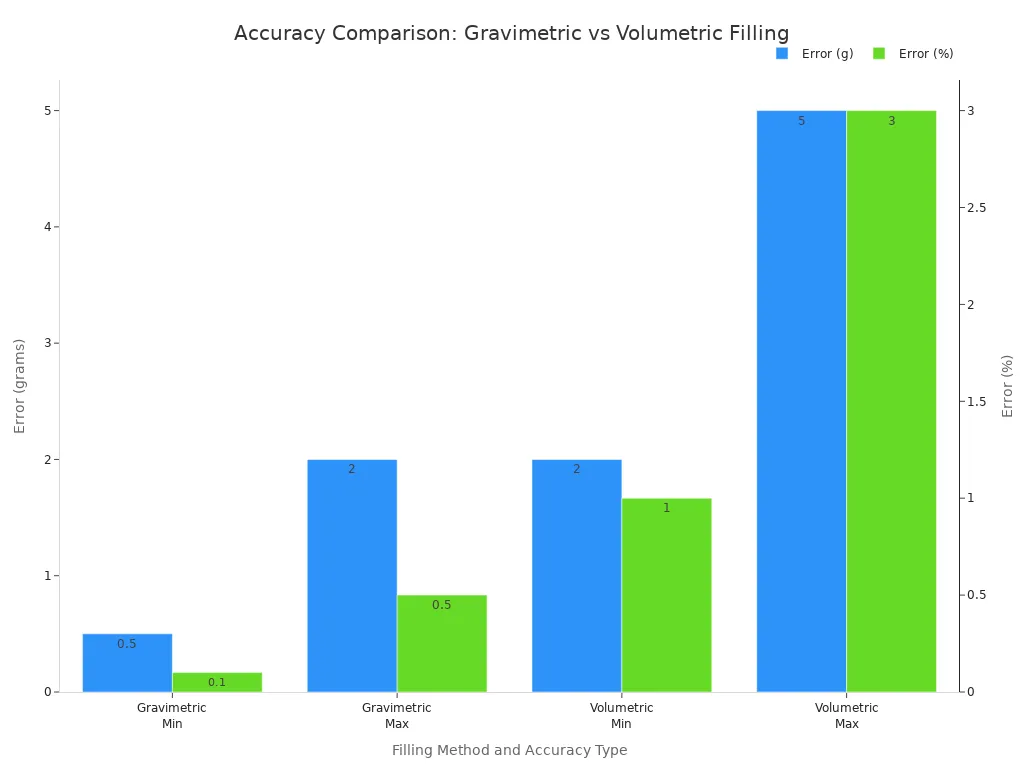
Gravimetric filling solves this by measuring actual weight during the fill. The system adjusts right away as density changes. This method gives much better accuracy for premium items.
Metric | Gravimetric | Volumetric |
|---|---|---|
Typical accuracy | ±0.5–2 g (±0.1–0.5%) | ±2–5 g (±1–3%) |
Is it affected by density changes? | No (unaffected by moisture, particle size) | Yes (depends on density staying the same) |
Best for | Premium products, following rules | Materials that are all the same |
Gravimetric systems use load cells that measure weight all the time. The control software checks each reading against the target weight. When density shifts, the system changes fill time or auger speed right away. This closed-loop feedback makes sure every package meets the goals.
The money impact of this accuracy becomes clear when we look at costs.
Item | Volumetric | Gravimetric (multihead weigher) |
|---|---|---|
Bag size | 500 g | 500 g |
Average extra product per bag | 8 g (1.6% overfill) | 2 g (0.4% overfill) |
Daily cost of extra product | $4,608 | $1,152 |
Yearly cost of extra product | $1,152,000 | $288,000 |
Extra money needed for setup | – | $43,000 |
Yearly savings | – | $864,000 |
Time to pay back | – | 18 days |
Net benefit over 5 years | – | $4,277,000 |
These numbers show why makers of high-value coffee packaging equipment now choose gravimetric tech. The switch pays for itself fast.
Multihead weighers are the best in net weight filling. These machines use many weigh heads that work together. Each head holds a small amount of product. The computer picks the mix of heads that gets closest to the target weight. This method gets very high accuracy at fast speeds.
Coffee beans are some of the most costly farm products. Every gram of overfill is lost profit. Precision weighing cuts coffee product giveaway by up to 1.2% each year. Automated accuracy gets fill weights within ±0.2 grams. Manual methods usually give 2%–5% extra product per bag.
The money benefits go beyond saving materials:
A premium snack maker that upgrades from a linear weigher to a multihead system saves $4,500 each month by reducing overfill from 3% to 0.5%.
Yearly material savings total $54,000 against equipment costs of $35,000–$180,000.
Labor savings from automated work add $1,500 monthly ($18,000 yearly).
A 35% boost in packaging speed gives another $2,000 in monthly value.
Total monthly savings of $8,000 against a $180,000 equipment cost mean a 22.5-month payback period.
Yearly savings from less waste and better accuracy range from $5,000 to $15,000+. Most coffee roasters get full return on investment within 12 to 24 months. These numbers make a strong case for upgrading old filling lines.
SUNYI's SC-6 model shows this precision in action. The machine has six synchronized lanes for high-volume production. It handles powders, pastes, liquids, and granules with accuracy. This versatility makes the SC-6 good for many product types. Coffee roasters can fill ground coffee, whole beans, and flavored types on one machine. Tea producers can switch between loose leaf, powdered matcha, and tea sachet packing machine work without changing equipment.
Liquid products bring special filling challenges. Tea concentrates and liquid coffee extracts have different thicknesses. These thick liquids tend to drip and smear. Drips make messy packages and wrong fill amounts. Precision nozzle technology fixes these problems with several methods.
Modern filling nozzles have features that stop drips at the source:
Suck-back function: The pump goes backward briefly after dosing, pulling the liquid column back into the nozzle to stop trailing drips.
Spring-loaded cut-off nozzles: The valve closes mechanically the moment filling stops, cutting the droplet cleanly.
Heated and coated tips: Temperature control keeps thick products like tea concentrate flowing smoothly, while food-grade coatings reduce sticking to the nozzle tip.
These technologies work together to give clean, accurate fills. Wide-bore nozzles with heating jackets keep a steady flow of thick products. This design reduces clogging and dripping. The result is a cleaner work area and less product waste.
Precision filling directly affects product quality and customer happiness. Consistent portion sizes mean consistent taste. Every cup brewed from a package gives the same strength and flavor. This reliability builds customer trust and leads to repeat buys. For makers of coffee packaging machines, precision filling is a key factor that sets them apart in a tough market.
The same ideas apply across the bigger category of coffee packaging equipment. Whether filling capsules, pouches, or bags, accurate dosing matters. Modern coffee packaging machines combine weighing and filling into smooth operations. These systems cut waste, boost efficiency, and protect profit margins. For tea packaging equipment, precision filling makes sure each sachet has the right amount of leaves. This accuracy keeps the delicate flavor balance that tea drinkers expect.
Precision filling technology keeps getting better. Each new generation of coffee & tea filling machine gives tighter tolerances and faster speeds. Producers who invest in these systems get a clear edge over competitors. They cut costs, improve quality, and satisfy customers more effectively.
People want packaging that is better for the earth. New rules also push companies to be greener. Coffee and tea makers need machines that are kind to the planet but still work fast. Modern coffee & tea filling machines solve these problems. SUNYI builds its machines from 304 stainless steel. This material lasts a long time and is easy to clean. A machine that lasts longer means fewer replacements. This cuts down on waste from old equipment.
Using energy is the main cause of greenhouse gases on a packaging line. Using less power lowers the carbon footprint.
Servo motors use energy only when needed and give very exact motion control. This means less energy use and less heat.
Practice
Typical energy savings
Install VFDs and servo drives
10–25% on motor-driven parts
Kenwei Group says that adding VFDs and servo drives to rotary packing machines gives these savings. Servo‑driven parts with PLC control give the best acceleration. The result is less energy per package. Less energy per package means a smaller carbon footprint.
TAIXIANG MACHINE reports even bigger gains. Using servo drive technology cuts energy use by up to 35%. The power‑on‑demand method uses power only when movement is needed.
These savings add up fast. A single filling line running two shifts a day can cut thousands of dollars in electricity costs each year. Producers who invest in servo‑driven coffee packaging equipment lower both costs and emissions.
Packaging formats are changing. Brands want lighter materials that use less plastic. Many now use mono‑material pouches that are easier to recycle. These materials need careful handling. Modern coffee packaging equipment handles these delicate materials with precision. Adjustable sealing temperatures keep packages intact.
SUNYI's machines work with many packaging materials. The systems adjust to thin films and stand‑up pouches. This flexibility lets brands choose the most sustainable option. One line handles different formats.
Coffee loses freshness quickly when it touches oxygen. Nitrogen flushing solves this problem. The machine puts nitrogen gas in before sealing. Nitrogen pushes the oxygen out. This keeps coffee fresh for months for consumers. Less spoilage means less food waste. This helps both the planet and the business.
Old cleaning methods use a lot of water and chemicals. CIP systems move cleaning solutions without taking the machine apart. Sensors watch the cycle. This cuts water use a lot. SUNYI's stainless steel build supports CIP cleaning. The smooth surfaces stop bacteria from growing. This reduces cleaning time.
These packaging solutions help producers meet sustainability goals. Nitrogen flushing keeps coffee and tea fresh. CIP systems save water. Energy‑efficient drives cut electricity use. Together, these features make modern coffee & tea filling machine technology a strong tool for helping the environment.
People's buying habits have changed a lot. Single-serve capsules and pods now fill store shelves. This change forces producers to rethink their equipment plans. A fixed production line limits growth. A flexible one opens new doors. Modern coffee packaging machines must handle many formats without losing speed or accuracy.
Producers today face a hard balancing act. They must serve stores that want big bags. They must also supply offices that need single-serve pods. Each format needs different fill settings, sealing heat, and materials. A separate line for each product costs too much. Multi-format machines fix this by putting several abilities into one unit.
The CSV40 Paket Series shows this approach. This vertical multi-format line uses advanced servo-assisted tech. Operators can change formats easily, which is the main way to adapt fast. The machine fits many bag types, like PAKET, GABLE TOP, and PILLOW-SHAPE styles. Bag sizes range from 60x40x70 mm up to 200x450 mm. This versatility lets producers meet different customer needs on one platform.
Modern packaging machines switch between sizes and styles with little manual work. This ability helps with product variety and custom packaging. A producer can run a morning batch of 250-gram stand-up pouches. The same machine can shift to 1-kilogram pillow bags by lunch. This flexibility also applies to materials. Thin recyclable films, foil layers, and compostable structures each need different sealing settings. Multi-format machines store these settings digitally and apply them on their own.
SUNYI brings special know-how to this area. The company provides packaging solutions for Nespresso, K Cup, and Dolce Gusto coffee capsule types. Each capsule has its own size and fill needs. A machine built for one brand cannot just handle another without proper design. SUNYI's systems account for these differences, giving producers confidence to serve many markets.
Format changeovers used to take whole shifts. Workers adjusted guides by hand, changed sealing jaws, and recalibrated sensors. Every step could cause errors. Automated changeover systems remove this problem. Servo-driven axes move themselves. Touchscreen guides walk operators through each step. The whole job takes minutes, not hours.
Less downtime means more output. A line that changes in 15 minutes rather than 3 hours gains almost 3 hours of product time per switch. For a producer making three format changes daily, that adds 9 extra production hours each day. These gains make the investment in automated changeover worth it. Companies that skip this upgrade fall behind rivals that use it.
Modern coffee packaging machines use software to handle complexity. Each product version has its own recipe. The recipe includes fill weight, sealing temperature, gas flush level, and conveyor speed. Operators no longer need to remember these details or look them up. They pick a product from a touchscreen menu, and the machine sets itself up.
Recipe management also supports quality. The system logs every run, recording actual settings against targets. This data helps producers keep consistency across batches. When a customer has a problem with a specific batch, the producer can see exactly what happened during filling. This traceability builds trust and protects brand image.
Market studies show that makers now offer modular and scalable machines. Producers can start with lower-capacity gear and upgrade over time. This cuts initial cost. Also, machines that handle more capsule materials—like compostable, biodegradable, and recyclable ones—let producers meet environment demands without buying all-new equipment. This double flexibility helps long-term success and return on investment.
For tea producers, similar benefits apply. A tea sachet packing machine with flexible options handles different leaf sizes and bag styles. A coffee pouch machine serves both store and foodservice channels. These flexible packaging solutions reduce the need for many separate lines. Producers gain speed, lower their money risk, and react quickly to market changes. In today's fast-moving drink market, that speed often decides success.
Data integration is the next big step in packaging efficiency. Modern coffee & tea filling machines now connect to the internet and share data right away. This connection creates the smart factory that Industry 4.0 promises. Producers who use these tools see every part of their operations. They find problems early, fix them fast, and keep lines running smoothly.
Industry 4.0 changes how factories work. Machines no longer work alone. They talk to each other and to central control systems. This network creates a digital link that connects every step of production. A filling machine can send data about its speed, temperature, and output to a central dashboard. Managers see this information in real time from anywhere in the world.
Centralized control systems gather data from many machines at once. Operators watch multiple lines from one screen. They compare performance across shifts and products. This view helps them make better choices about scheduling and staffing. When one line runs slower than another, managers can check right away. They can also spot trends that point to future problems before those problems stop production.
SUNYI supports this connected approach with a global technical help network. The company serves clients in over 170 countries. This worldwide reach means help is always close. Remote diagnostics let SUNYI engineers check machine health from far away. They can adjust settings, run tests, and guide local teams through fixes without traveling. This support cuts downtime and keeps production on track.
Unplanned downtime costs producers money and customers. A machine that stops without warning delays shipments and breaks trust. Predictive maintenance uses data to stop these surprises. Sensors track vibrations, temperature, and pressure on key parts. Software analyzes this data to find early warning signs. When something looks wrong, the system alerts the team before a breakdown happens.
The source suggests several best practices to cut equipment downtime. These practices apply directly to coffee packaging equipment:
Use a CMMS: Track, notify, and schedule tasks to avoid missing maintenance work.
Plan Preventive Maintenance (PM): Fix assets before they break, so you don't have to fix them after.
Train Operators and Technicians: Good training cuts human errors, a big cause of machine downtime.
Use IoT and Condition Monitoring: Watch real-time vibrations, temperature, pressure, and other signs to find early warnings and reduce machine downtime before it becomes critical.
Keep Spare Parts Inventory: Use CMMS-based inventory controls to keep key parts in stock.
These steps work together to keep filling lines running. A producer who follows them cuts service costs and extends machine life. Remote diagnostics add another layer of protection. Engineers can connect to a machine from a distant office and run tests. They can often fix software issues without sending a technician. This speed cuts downtime from days to hours.
Overall Equipment Effectiveness, or OEE, measures how well a line performs. It combines availability, performance, and quality into one score. Real-time monitoring systems calculate OEE all the time. They show where a line loses time or creates waste. This information guides improvement efforts.
Real-time data shows bottlenecks that slow production. A machine might run slower than its rated speed. Another might stop often for small jams. Monitoring systems show these issues clearly. Managers can then focus on the biggest problems. They can also track the impact of changes they make. This data-driven approach turns guesswork into science.
For tea producers, the same benefits apply. A tea sachet packing machine with IoT sensors reports its performance just like a coffee line does. Producers use this data to plan maintenance around production schedules. They avoid stopping a line during peak demand. They also keep the right spare parts on hand. This planning cuts downtime and keeps customers happy. The technology behind these systems keeps improving. Each new generation of coffee packaging equipment offers better sensors and smarter software. Producers who adopt these tools set themselves up for long-term success.
These five trends are not separate ideas. They work together as one plan. Automation, precision, sustainability, flexibility, and IoT help build strong operations. Companies that buy modern machines can cut packing time by up to 50% and raise production efficiency by 40%. One automated line can replace four to ten workers, lowering labor costs by 30%. Payback time drops from three years to about eighteen months.
Smart producers see that AI-driven process optimization will build on these trends. The next wave of packaging innovation will reward those who act now. Since 55% of tea consumers prefer eco-friendly packaging, sustainability directly drives market growth.
SUNYI is ready as a strategic partner. As a National High-Tech Enterprise serving clients in over 170 countries, the company offers reliable coffee and tea filling solutions. Producers should check their current equipment against these trends and make smart upgrades for lasting competitive advantage.
Gravimetric filling systems reach accuracy within ±0.5 to 2 grams per package. Volumetric systems usually vary by ±2 to 5 grams. For costly coffee beans, this difference saves up to 1.2% of product each year. Most producers earn back their equipment cost within 12 to 24 months just from less giveaway.
Modern machines use predictive maintenance through IoT sensors. These sensors track vibration, temperature, and pressure on key parts. Software warns operators before breakdowns happen. Regular cleaning cycles and scheduled part replacements keep lines running. Remote diagnostics let technicians find and fix problems without going to the factory.
Yes. Multi-format machines store digital recipes for each product. Operators pick a product from a touchscreen menu. The machine changes fill weight, sealing temperature, and conveyor speed on its own. Format changeovers take minutes instead of hours. This flexibility lets producers serve many markets without buying separate lines for each product type.
Modern machines handle lightweight recyclable films and mono-material pouches. Servo-driven systems cut energy use by 10–35% compared to older designs. Nitrogen flushing keeps coffee fresh and reduces food waste. Clean-in-Place systems save water during cleaning cycles. Stainless steel build lasts longer and cuts down on replacement needs.
Most modern machines have touchscreen interfaces with step-by-step guides. Operators learn basic use within days. Advanced training covers recipe management, troubleshooting, and routine care. SUNYI gives pre-delivery training and operation manuals with every machine. Global technical support teams offer remote help when questions come up during production.
Real-time monitoring shows machine speed, output, and quality data all the time. Managers track Overall Equipment Effectiveness from central dashboards. This data reveals bottlenecks and slowdowns that hurt production. Producers use these insights to adjust schedules, plan maintenance around busy times, and keep the right spare parts in stock.