
Views: 0 Author: Site Editor Publish Time: 2025-11-10 Origin: Site
Ever wondered how your favorite yogurt stays fresh in its cup? This is where Cup Filling and Sealing Machine play a vital role. These machines are essential in the packaging industry, ensuring products remain safe and uncontaminated. In this post, you'll learn about fill seal machines, their significance, and how cup filling and sealing machines operate to enhance packaging efficiency.
Fill seal machines work primarily by applying heat and pressure to package materials. The process starts when the machine positions a container or pouch beneath the sealing head. The sealing head contains heated die plates set to a precise temperature. When activated, these plates press down on the packaging material, melting the thermoplastic layers. This melting causes the plastic layers to fuse together, forming a tight, airtight seal. Pressure ensures the layers bond uniformly while the heat softens the material. After a short dwell time, the heat is removed, and the seal cools, solidifying into a durable bond that prevents leaks and contamination.
Modern fill seal machines are highly automated to improve speed and consistency. Containers are automatically fed into the machine using conveyors or robotic arms. Sensors detect container positioning, ensuring precise alignment before filling and sealing. The filling system dispenses the exact product amount into each container, whether liquid, powder, or solid. Once filled, the machine moves the container to the sealing station. The sealing head then applies heat and pressure as described. After sealing, the machine cools the package and ejects it for further processing or packing. Automation minimizes manual labor, reduces errors, and increases throughput, often handling hundreds of containers per minute.
Sensors and monitoring systems play a critical role in maintaining fill seal machine performance. Photoelectric sensors detect containers’ presence and position, allowing precise timing of filling and sealing actions. Temperature sensors constantly measure the sealing head’s heat to maintain the ideal temperature for consistent seals. Pressure sensors ensure the sealing force stays within set limits, preventing weak or damaged seals. Additionally, control systems monitor cycle counts and detect faults, triggering alarms or automatic shutdowns if parameters deviate from standards. These feedback mechanisms ensure reliable, high-quality sealing, reduce waste, and help operators maintain smooth production.
Fill seal machines come in various types, each designed to meet specific packaging needs and production scales. Understanding these types helps businesses select the right equipment for their operations.
Impulse Heat Sealers operate by sending a quick burst of electrical current through a heating element during the sealing cycle. This heats the element just long enough to melt the packaging material and then immediately cools down. Since the heating element is only hot during sealing, impulse sealers consume less energy and require no warm-up time. They are ideal for small-scale operations and sealing lightweight films such as polyethylene bags.
Continuous Heat Sealers maintain a constant temperature on a heated bar or band. Packages move along a conveyor while the heated element continuously seals the edges. This type suits high-volume production lines and thicker or multilayer films, where speed and consistent heat application are critical. Continuous sealers can handle dozens of packages per minute, making them suitable for industrial settings.
Manual Fill Seal Machines require operators to place containers, initiate filling, and trigger sealing. These machines are cost-effective for low-volume production or small businesses. They offer flexibility but depend heavily on operator skill and speed.
Automatic Fill Seal Machines integrate container feeding, filling, sealing, and discharge into a single automated process. Sensors and robotics position containers precisely, fill exact product amounts, and seal packages with minimal human intervention. These machines boost efficiency, reduce errors, and support high throughput—sometimes hundreds of packages per minute. Automation also ensures consistent seal quality and reduces labor costs.
Beyond general-purpose machines, specialized fill sealers address unique packaging challenges:
● Induction Sealers use electromagnetic energy to heat foil liners on container openings, creating tamper-evident seals without direct contact or heat. Common in pharmaceuticals and beverages.
● Vacuum Sealers remove air from packages before heat sealing, extending product shelf life by preventing oxidation and spoilage.
● Ultrasonic Sealers employ high-frequency vibrations to generate localized heat, bonding materials without external heat sources. Useful for heat-sensitive products.
● Form-Fill-Seal (FFS) Machines combine forming packaging from film, filling, and sealing in one continuous operation. They are versatile for various product types and packaging formats.
Each specialized machine offers advantages tailored to specific industry requirements, product types, or packaging materials.
Machine Type | Operation Mode | Ideal For | Speed | Advantages |
Impulse Heat Sealer | Semi-automatic | Lightweight plastic films | Moderate | Energy efficient, no preheating required |
Continuous Heat Sealer | Automatic | High-volume production, multilayer films | High | Consistent heat, suitable for thick materials |
Manual Fill Seal Machine | Manual | Small-scale or low-volume packaging | Low | Low cost, flexible |
Automatic Fill Seal Machine | Fully automatic | Industrial mass production | Very high | High precision, minimal human intervention |
Induction Sealer | Automatic | Bottled or foil-lidded products | Medium to high | Tamper-evident, non-contact sealing |
Vacuum Sealer | Semi/automatic | Food and electronics packaging | Variable | Extends shelf life, prevents oxidation |
Ultrasonic Sealer | Automatic | Heat-sensitive materials | Medium | No external heat, clean sealing |
Understanding the key components of a cup filling and sealing machine helps grasp how it functions efficiently in packaging. These machines combine precise filling, sealing, and cooling processes to produce sealed packages quickly and reliably.
The filling mechanism is responsible for accurately dispensing the product into each cup or container. It typically includes:
● Hopper or Reservoir: Holds the bulk product before filling.
● Metering System: Controls the amount dispensed per container. This can be: Auger fillers for powders, using a rotating screw to push product.
○ Piston fillers for liquids or semi-liquids, using a piston to draw and release fixed volumes.
○ Gravity fillers for free-flowing liquids, relying on gravity to fill.
● Filling Nozzle: Directs the product into the cup. It often has a valve to start and stop flow quickly, preventing spills or drips.
● Conveyor or Indexing System: Moves cups into position under the filler.
This mechanism ensures each cup receives the correct amount, maintaining product consistency and minimizing waste.
The sealing head is the heart of the sealing process. It typically consists of:
● Sealing Head: A pneumatic or servo-driven component that moves down to press the sealing film onto the cup rim.
● Heated Die Plates: These plates are heated to a precise temperature to melt the sealing film’s thermoplastic layer. They apply heat and pressure to fuse the film to the cup rim.
● Temperature Control: Sensors monitor and regulate the die plate temperature to ensure consistent sealing quality.
● Pressure Control: Regulates the force applied during sealing, ensuring uniform adhesion without deforming the cup.
The sealing head presses the film onto the cup for a set dwell time, allowing the heat to bond the layers. Afterward, it retracts to allow cooling.
Once the seal is formed, cooling is essential to solidify the bond and prevent seal failure. Components involved include:
● Cooling Bars or Plates: These may be integrated into the sealing head or positioned immediately after sealing to cool the seal quickly.
● Air Cooling: Some machines use gentle airflow directed at the seal area to speed up cooling.
● Release Mechanism: After cooling, the sealing head retracts fully, and the machine releases the sealed cup.
● Discharge Conveyor: Moves sealed cups away from the sealing station, ready for further processing or packaging.
Effective cooling prevents seal deformation and ensures a strong, leak-proof package.
Fill seal machines are vital across many industries because they improve packaging efficiency and product protection. Their versatility allows them to handle various products and packaging types. Here’s a closer look at key sectors benefiting from these machines.
The food sector relies heavily on fill seal machines to maintain freshness and safety. They package items like sauces, dairy products, snacks, and beverages quickly and hygienically. These machines:
● Accurately fill containers with liquids, powders, or solids.
● Seal packages airtight to prevent contamination.
● Support modified atmosphere packaging (MAP) by flushing inert gases to extend shelf life.
● Handle flexible pouches, cups, trays, and bottles.
For example, yogurt producers use cup filling and sealing machines to fill individual servings, seal them with foil lids, and keep products fresh during storage and transport. Snack manufacturers package chips or nuts in sealed bags to retain crispness. The high speed and consistency of fill seal machines help meet large-scale demand while ensuring food safety compliance.
In medical and pharmaceutical fields, packaging integrity is critical to product safety and efficacy. Fill seal machines provide:
● Tamper-evident seals to show if packaging has been opened.
● Sterile packaging environments for sensitive products.
● Precise dosing and filling for liquid medicines, powders, or tablets.
● Compatibility with specialized materials like foil and laminated films.
Pharmaceutical companies use fill seal machines to package syringes, vials, and blister packs. These machines ensure that medicines remain uncontaminated and dosage accuracy is maintained. The automation reduces human contact, limiting contamination risks. Additionally, induction sealing is often employed for tamper-proof closures on bottles and containers.
Beyond food and pharma, fill seal machines serve electronics, cosmetics, and chemical industries. They help package:
● Small electronic components in moisture-proof pouches.
● Creams, gels, and lotions in tubes or sachets.
● Chemicals and powders in sealed bags or containers.
For example, electronic manufacturers package sensitive parts in vacuum-sealed bags to prevent moisture damage. Cosmetic brands use fill seal machines to fill and seal tubes or sachets with creams and serums, ensuring product freshness and preventing leaks. Chemical companies package powders or liquids safely to avoid spills and contamination.
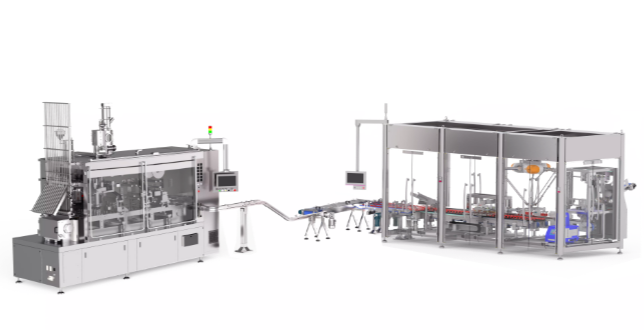
Fill seal machines offer several key benefits that make them essential in modern packaging operations. They help businesses improve productivity, maintain product quality, and reduce costs. Let’s explore these advantages in detail.
Fill seal machines are designed for high-speed operation, allowing companies to package large volumes quickly. Automation plays a big role here — machines can fill and seal hundreds of containers or pouches per minute without stopping. This rapid throughput minimizes bottlenecks in production lines and helps meet tight deadlines. Moreover, consistent cycle times reduce downtime and increase overall equipment effectiveness (OEE).
For example, a fully automatic cup filling and sealing machine can fill yogurt cups and seal them in a continuous flow, eliminating manual handling. This speeds up production while reducing labor costs. High-speed machines also support multi-lane configurations, further multiplying output.
One of the most critical advantages is the consistent quality of seals produced. Fill seal machines precisely control temperature, pressure, and dwell time during sealing. This tight control ensures each package has a uniform, airtight seal that prevents leaks, contamination, and spoilage.
Sensors continuously monitor sealing parameters, triggering alarms or shutting down the machine if any deviations occur. This real-time feedback helps maintain quality standards and reduces waste caused by faulty seals. Automated filling systems also ensure accurate product dosing, keeping fill levels consistent and reducing under- or overfilling.
Consistent seals enhance product shelf life, improve brand reputation, and reduce customer complaints. They also support compliance with food safety and pharmaceutical packaging regulations.
Using fill seal machines reduces operational costs in several ways:
● Labor Savings: Automation cuts down manual labor needed for filling and sealing. Operators mainly oversee the process and handle maintenance.
● Material Savings: Precise filling reduces product waste. Accurate sealing minimizes package rejects.
● Energy Efficiency: Modern machines use energy-efficient heating methods like impulse sealing, which only heats during sealing cycles.
● Reduced Downtime: Automated monitoring and easy calibration reduce machine stoppages and maintenance time.
● Scalability: Machines can be adjusted for different product sizes or packaging formats, avoiding the need for multiple machines.
Overall, fill seal machines provide a strong return on investment by boosting productivity and cutting costs.
Proper maintenance and calibration of fill seal machines ensure they operate efficiently and produce consistent, high-quality seals. Neglecting these tasks can lead to machine downtime, poor seal integrity, and increased waste. Here’s a detailed look at best practices for maintaining and calibrating these machines.
Fill seal machines handle various products, from liquids to powders, which can leave residues on machine parts. Regular cleaning prevents buildup that might cause contamination or interfere with sealing. Key cleaning points include:
● Sealing die plates: Remove any product residue or film fragments to avoid uneven seals.
● Filling nozzles: Clean to prevent clogging or inaccurate filling volumes.
● Conveyors and grippers: Wipe down to ensure smooth container movement and positioning.
● Sensors and cameras: Keep lenses and sensors free of dust or product splashes for accurate detection.
Perform visual inspections daily and deep cleaning weekly or as recommended by the manufacturer. Replace worn or damaged parts promptly to avoid breakdowns.
Temperature and pressure are critical parameters in the sealing process. Incorrect settings can cause weak seals, leaks, or damaged packaging. Calibration involves:
● Temperature calibration: Use a calibrated thermometer or thermal camera to verify the sealing head’s temperature matches the setpoint. Adjust controls if discrepancies arise.
● Pressure calibration: Check the force applied by the sealing head using pressure gauges or force sensors. Ensure it is within the manufacturer’s recommended range for the packaging material.
Calibrate these parameters regularly, especially after maintenance or part replacement. Automated machines often have built-in calibration routines to assist operators.
Even with proper maintenance, issues can arise. Common problems include:
● Weak or incomplete seals: May result from low temperature, insufficient pressure, or dirty sealing surfaces.
● Overheating or burnt seals: Caused by excessive temperature or prolonged dwell time.
● Inconsistent fill volumes: Often due to clogged nozzles, faulty metering systems, or misaligned containers.
● Sensor errors: Dirt, misalignment, or electrical faults can cause false readings, stopping the machine or causing mis-timed sealing.
To troubleshoot, first check cleaning and calibration status. Review machine logs and sensor feedback. Consult the user manual for error codes and corrective actions. Regular training for operators on maintenance and troubleshooting improves response times and reduces downtime.
Fill seal machines operate using heat and pressure to create airtight seals, with automation enhancing speed and consistency. Sensors and monitors ensure precision in filling and sealing processes. Future trends in fill seal technology suggest increased automation and improved sensor accuracy. Choosing the right machine depends on product type, production volume, and packaging material. offers advanced fill seal machines that boost efficiency and seal quality,SUNYI providing significant value to businesses in various industries.
A: A filling sealing machine is a device used to fill containers with products and seal them to prevent leaks and contamination.
A: A cup filling and sealing machine automates filling cups with products and sealing them using heat and pressure for airtight packaging.
A: Filling sealing machines improve efficiency, ensure consistent seal quality, and reduce labor costs in production processes.


