Views: 0 Author: Site Editor Publish Time: 2026-09-15 Origin: Site
A ±0.5g deviation per capsule looks small on paper. On a production line running 500 capsules per minute, that variance destroys your yield. You either give away hundreds of kilograms of coffee annually, or you short-fill capsules and ruin the extraction profile. Hitting exact target weights at high speeds means controlling organic material physics and mechanical engineering simultaneously. Coffee powder changes behavior based on roast level, ambient humidity, and grind size. You cannot just dump it into a hopper and expect perfect doses. Facility managers must evaluate material variables alongside machine capabilities before buying packaging equipment. You need precision dosing mechanisms and active quality control features to keep the line running efficiently. We will break down exactly how to manage powder flow, configure auger tooling, and implement feedback loops to lock in your target weights.
Industry Standard Tolerances: High-performance equipment should consistently maintain a dosing accuracy of ±0.15g to ensure uniform extraction and prevent material waste.
Material Physics Matter: Bean density, roast level, oil content, and grind size fundamentally alter powder flow dynamics, requiring adaptable dosing mechanisms.
Mechanical Imperatives: Servo-driven auger systems provide superior control over traditional mechanical fillers, allowing for micro-adjustments based on specific coffee blends.
Closed-Loop Quality Control: Integrating inline weight checking with automatic feedback loops is non-negotiable for minimizing reject rates and maintaining continuous production efficiency.
Automation Over Manual Labor: Fully automatic systems eliminate the human error inherent in manual or semi-automatic operations, ensuring absolute consistency while reducing long-term labor costs.
Single-serve coffee production demands an industry tolerance benchmark of ±0.15g. Bulk bagging operations easily absorb wider margins. Small-format capsules do not. A standard capsule holds between 5g and 13g of ground coffee depending on the specific format. Missing the target weight by even a fraction of a gram completely changes the brewing dynamics. You must maintain strict coffee capsule filling accuracy to guarantee a uniform consumer experience across millions of units.
Dose weight dictates bed depth and water channeling during the brewing cycle. Under-filling leaves a shallow coffee bed inside the capsule. Pressurized water always takes the path of least resistance. It channels through the loose powder too fast, leaving you with weak, under-extracted coffee that lacks crema. Over-filling creates severe mechanical failures. Excess powder restricts water flow, strains the brewing pump, and causes bitter over-extraction. Excess powder also spills onto the capsule rim during the filling stage. This compromises the foil seal, leading to oxidation on the shelf or messy blowouts inside the consumer's kitchen appliance.
Let us look at the financial impact of dosing variance on a high-speed line. If your equipment overfills by 0.3g per capsule at 300 capsules per minute, you give away 5.4 kilograms of premium coffee every hour. Over a standard shift, that waste destroys your profit margin. Simultaneously, capsules rejected for poor sealing waste expensive foil lids and plastic shells.
Variance Issue | Physical Impact on Capsule | Extraction Result | Production Consequence |
|---|---|---|---|
Under-filling (-0.3g or more) | Shallow powder bed, loose compaction | Water channeling, weak flavor profile | Brand degradation, consumer complaints |
Over-filling (+0.3g or more) | Powder overflow on sealing rim | Pump strain, bitter over-extraction | Seal failure, rejected units, material waste |
Optimal Tolerance (±0.15g) | Flat, consistent bed depth | Balanced extraction, ideal crema | Maximized yield, zero product giveaway |
Coffee acts like a volatile organic compound on the production floor. Its flow characteristics shift based on the roast profile. Medium-roast coffees flow smoothly through hoppers and augers. Their cellular structure stays intact, and surface oils remain low. Dark-roast coffees create massive mechanical friction. The extended roasting process forces natural oils to the bean's surface. This high oil content causes powder bridging and rat-holing inside the hopper.
Bean density also forces volumetric adjustments. Dark roasts are less dense than light roasts. To hit a 5.5g target weight, the dosing mechanism must dispense a physically larger volume of dark roast powder. Operators have to calibrate the equipment for every specific roast profile.
Roast Profile | Surface Oil Content | Bulk Density | Flowability Rating |
|---|---|---|---|
Light Roast | Very Low | High | Excellent (Free-flowing) |
Medium Roast | Low to Moderate | Medium | Good (Predictable flow) |
Dark Roast | High (Sticky) | Low | Poor (Prone to bridging) |
Particle size distribution (PSD) changes how coffee powder behaves under pressure. A grind profile containing a high percentage of microscopic fines packs densely and flows erratically. Fines compact inside the auger flights. This compaction causes inconsistent dosing volumes. A highly uniform, coarser grind flows predictably but might fail to provide enough extraction resistance inside the capsule.
Ambient humidity and intrinsic moisture levels make powder flow worse. High humidity forces fine coffee particles to clump together. This disrupts the steady feed into the dosing funnel. The grinding process also generates static electricity. Static makes powder cling to the hopper walls and dosing nozzles. You must install anti-static bars or ionized air jets to maintain dosing consistency.
Freshly roasted and ground coffee actively releases carbon dioxide. This degassing process changes the bulk density of the powder hour by hour. If you feed freshly ground coffee directly into a coffee powder dosing machine without a resting period, the volume-to-weight ratio shifts continuously. Accurate dosing becomes impossible.
Facilities must enforce controlled resting and degassing periods. Stabilizing the powder ensures its bulk density stays constant once it enters the machine's hopper. Consistent bulk density is the absolute prerequisite for any mechanical dosing system to hit tight weight tolerances.
Here are standard procedures for managing volatile coffee powder on the floor:
Monitor ambient humidity in the packaging room and keep it strictly below 45%.
Install anti-static devices directly above the hopper inlet to neutralize charged particles.
Implement a strict 12-to-24 hour degassing hold for all dark roasts before packaging.
Measure the bulk density of every batch manually before loading it into the filler.
The auger filler dictates your baseline accuracy. servo auger filling systems use high-precision servo motors to drive the auger screw. Servo motors give you absolute control over rotational positioning, acceleration, and deceleration. They execute micro-rotations to dispense exact fractions of a gram. They adjust instantly based on feedback from the load cells.
Traditional mechanical systems use clutch-brake mechanisms or pneumatic drives. These older technologies suffer from mechanical drift, wear-induced inaccuracies, and delayed response times. They lack the precision needed for single-serve capsules. You also need custom auger tooling. The flight pitch and diameter of the auger screw must match the specific flow characteristics of your coffee blend. A generic auger will not hold a ±0.15g tolerance.
The final delivery of powder depends entirely on nozzle design. Clogged filling nozzles cause irregular dosing. This leads directly to weak or overflowing capsules. As coffee exits the auger, trailing powder easily drops onto the capsule's sealing rim.
Manufacturers use anti-drip technologies to stop this contamination. Pneumatic shut-off valves physically block the nozzle opening the millisecond the dose finishes. Spinner plates cut off the powder flow cleanly. Vacuum pullback systems create negative pressure to hold trailing particles inside the nozzle. You must keep the rim clean to achieve a hermetic foil seal.
Consistent dosing requires consistent head pressure above the auger. Horizontal and vertical agitators inside the hopper slowly churn the coffee powder. This agitation maintains a uniform bulk density. It prevents rat-holing, a condition where powder flows only down the center and leaves stagnant material on the hopper walls.
You must maintain a constant volume of powder in the hopper. Level sensors monitor the powder height and trigger automated vacuum feeders to replenish the supply. Keeping the hopper at an optimal, constant level ensures the exact same downward pressure on the auger screw for every single dose.
Residual coffee oils accumulate rapidly inside the dosing apparatus. These oils go rancid and form a sticky residue on the auger, funnel, and agitators. This buildup increases friction, disrupts powder flow, and destroys dosing accuracy.
You need strict sanitation protocols to maintain performance. Operators must clean the dosing components frequently to strip away oil buildup. High-quality machines use tool-less dismantling designs. Technicians can quickly remove the hopper, auger, and nozzles for thorough cleaning without causing massive downtime.
Different capsule formats create unique mechanical challenges. Nespresso capsule filling operates under severe volumetric limitations. A standard Nespresso-compatible capsule holds only 5g to 6g of coffee. The physical space inside the capsule is highly restricted. Your margin for error is practically zero.
To fit the required dose into this small space and ensure proper extraction resistance, you must compress the powder. Specialized tamping mechanisms press down on the coffee bed after filling. The tamper must apply exact pressure to compact the powder evenly. If the tamper pushes too hard, it punctures the delicate base of the capsule. If it pushes too lightly, the foil lid will not seal properly.
K-Cups have a much larger volume capacity. They typically hold 10g to 13g of coffee. However, they introduce a different variable: the internal paper filter. As powder drops into the K-Cup, it bounces off the filter paper. It also clings to the sides due to static electricity generated during the drop.
Managing this requires specific ramp surface designs on the dosing nozzle to guide the powder smoothly. You also need controlled machine vibration applied to the capsule after filling. This vibration settles the powder. It knocks down loose particles from the filter walls and ensures a perfectly flat bed before the capsule reaches the foil sealing station.
Mechanical precision requires continuous verification. inline weight checking systems sit directly after the filling station. These highly sensitive load cells weigh every single capsule as it moves down the line.
The checkweigher communicates directly with the servo auger filling system via a closed-loop feedback process. If the load cell detects a trend of over-filling or under-filling, the Programmable Logic Controller (PLC) automatically adjusts the servo motor's rotation. This on-the-fly correction brings the dose back to the exact target weight without stopping production.
When a capsule falls outside the ±0.15g tolerance, the system handles it immediately. Automated reject mechanisms physically kick out-of-tolerance capsules off the line before they reach the sealing or cartoning stages. This stops you from wasting expensive foil lids and outer packaging materials on defective products.
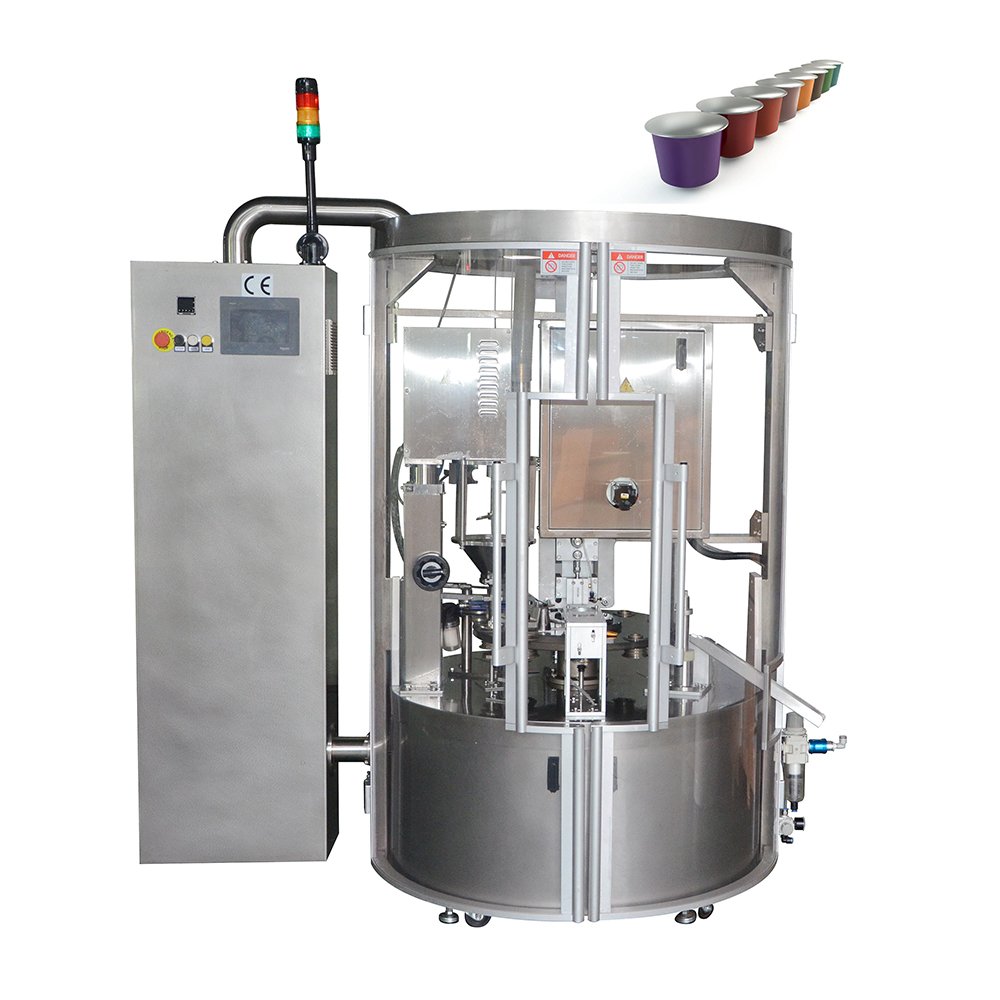
Fully automatic coffee capsule filling machine systems eliminate the human error found in manual or semi-automatic operations. Automation ensures absolute consistency at high speeds. It drastically reduces long-term labor costs and optimizes overall production yield by catching errors instantly.
Modern production facilities rely on data to maintain quality standards. Integrated data acquisition systems log the individual weights of thousands of capsules. They compile batch statistics and calculate standard deviation in real time.
This data supports quality assurance audits and continuous process improvement. Managers analyze the logs to identify when mechanical wear affects accuracy. They use the data to determine when a specific coffee blend requires a different auger setup. Traceable data ensures compliance with internal quality metrics and external retail standards.
Not all equipment handles the nuances of coffee powder. When evaluating a coffee capsule filling machine manufacturer, look for engineering teams that request actual coffee samples. A reputable manufacturer uses these samples to custom-machine the auger screws, agitators, and dosing nozzles. They match the tooling to the specific flow characteristics of your product.
Evaluate their ability to integrate third-party precision components. The best machines utilize globally recognized PLC brands, high-end servo drives, and sensitive load cells. Proprietary, closed-ecosystem electronics create massive maintenance bottlenecks down the line.
Demand a rigorous Factory Acceptance Testing (FAT) protocol before finalizing a purchase. The FAT must use your actual coffee blends and your specific capsule format. Do not accept runs using a generic, easy-to-flow test powder.
The testing criteria must be strict. The FAT must demonstrate the machine's ability to hold the ±0.15g accuracy tolerance continuously at the machine's maximum rated continuous speed. Running accurately at half speed proves nothing about production-floor performance.
Require the following during your FAT:
Continuous run of at least 10,000 capsules at maximum rated speed.
Verification of the ±0.15g tolerance across all lanes simultaneously.
Demonstration of the automatic reject mechanism triggering correctly on intentionally altered weights.
Full teardown and cleaning demonstration to verify tool-less maintenance claims.
Mechanical wear happens in high-speed manufacturing. Over millions of cycles, augers wear down, servo drives require recalibration, and seals degrade. Outline the expected maintenance schedule for all dosing components before you buy.
Evaluate the manufacturer's long-term support infrastructure. Ensure they have a reliable supply of spare parts. Check for advanced diagnostic software capabilities for remote troubleshooting. Demand clear guidance on sanitation protocols to prevent rancid oil buildup from destroying your accuracy over time.
Compile detailed product specifications, including roast levels, grind size distribution, capsule format, and target production speeds.
Request a formal powder flow test and capability study from shortlisted manufacturers using your actual coffee blends.
Mandate a Factory Acceptance Test (FAT) that proves the ±0.15g tolerance at maximum continuous operating speed.
Establish strict internal sanitation and maintenance schedules to prevent oil buildup and mechanical drift on the production floor.
A: The industry standard accuracy tolerance for premium single-serve coffee capsules is between ±0.15g and ±0.2g. Maintaining this tight tolerance ensures uniform water extraction, prevents weak coffee, and eliminates powder overflow that compromises the capsule's hermetic seal.
A: Dark roast coffees have higher surface oil content and lower density than medium roasts. These oils increase friction inside the hopper and auger, causing the powder to clump or bridge. This erratic flow disrupts dosing consistency and requires frequent cleaning to remove sticky residue.
A: Servo motors provide precise rotational control over the auger screw, allowing for exact acceleration, deceleration, and micro-positioning. Unlike traditional mechanical clutches, servos resist mechanical drift and make instant, fractional adjustments to the dose based on real-time checkweigher feedback.
A: Freshly roasted and ground coffee releases carbon dioxide, which continuously alters the powder's bulk density. If coffee does not rest and degas before filling, the volume-to-weight ratio fluctuates, making it impossible for the auger to dispense a consistent weight.
A: Inline weight checkers weigh every capsule in real time. If they detect a weight trend drifting out of tolerance, they send a closed-loop feedback signal to the PLC to adjust the servo auger automatically. They also reject bad capsules before sealing, saving packaging materials.
A: Nespresso capsules have a small volume (5g-6g) and require specialized mechanical tamping to compress the powder evenly. K-Cups hold more volume (10g-13g) and contain a paper filter, requiring specific nozzle ramp designs and vibration settling to create a flat bed without static cling.