
Views: 0 Author: Site Editor Publish Time: 2025-11-12 Origin: Site
Imagine a world where production lines run smoothly, efficiently, and without waste. Filling machines make this a reality. They are crucial in industries, ensuring precise product packaging. In this post, you'll learn about the importance of filling machines in production. We'll explore various types, including the Powder Filling and Sealing Machine, and their roles in different sectors.
Liquid filling machines come in several types, each designed to handle specific liquids and production scales:
● Manual Liquid Filling Machines: Operated by hand, these machines suit small-scale production or labs. They improve accuracy and speed compared to manual pouring but require human effort.
● Semi-Automatic Liquid Filling Machines: These use pistons, syringes, or nozzles to ensure precise, drip-free filling. They handle a broad range of liquids, including detergents and pharmaceuticals.
● Fully Automatic Liquid Filling Machines: Ideal for large-scale production, these machines fill various liquids, including food products and beverages, with high speed and accuracy.
● Inline Liquid Filling Machines: Containers move in a straight line on a conveyor belt. These machines fill both low and high viscosity liquids, commonly used for dairy, food, and cosmetics.
● Rotary Liquid Filling Machines: Containers rotate through multiple stations for filling, sealing, and capping. This type suits high-speed operations in beverage and personal care industries.
● Piston Filling Machines: They use pistons to deliver precise volumes, perfect for thick liquids like cosmetics and sauces.
Table: Comparison of Common Liquid Filling Machines
Type | Operation Level | Suitable For | Advantages | Industries |
Manual | Hand-operated | Small batches, labs | Low cost, simple setup | Labs, small businesses |
Semi-Automatic | Partial automation | Medium-scale liquid filling | Improved accuracy, moderate speed | Pharma, detergents |
Fully Automatic | Fully automated | Large-scale production | High speed, consistent quality | Food, beverage |
Inline | Conveyor-based | Varying viscosities | Versatile, easy integration | Dairy, cosmetics |
Rotary | Rotary table system | High-speed operations | Efficient multi-station process | Beverage, personal care |
Piston | Piston-driven | Thick or viscous liquids | Precise volume control | Sauces, cosmetics |
Liquid filling machines play a vital role in the beverage sector. They handle:
● Water, juices, and milk
● Carbonated drinks and alcoholic beverages
● Sauces, cooking oils, and salad dressings
Their versatility allows beverage manufacturers to maintain consistent fill levels, reduce waste, and speed up production.
Using liquid filling machines offers several benefits:
● Precision: Accurate filling reduces product waste and improves customer satisfaction.
● Speed: Automated machines increase throughput, meeting high demand.
● Versatility: They can handle various container types and liquid viscosities.
● Hygiene: Many machines operate in clean environments, reducing contamination risks.
● Cost-Efficiency: Automation lowers labor costs and increases production reliability.
These advantages make liquid filling machines essential for modern beverage manufacturing.
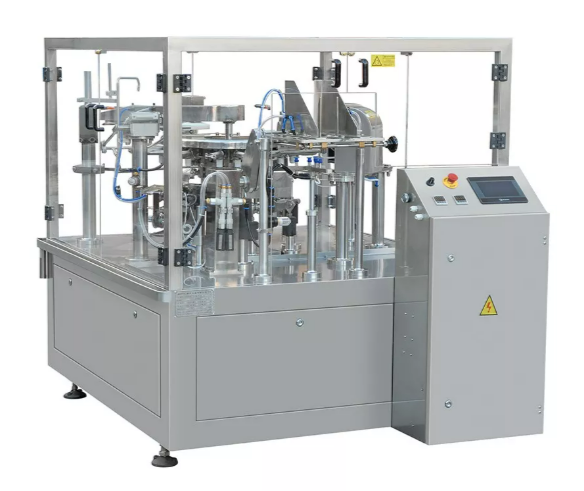
Powder filling machines handle powdered or granulated products by using precise feeding mechanisms to ensure accurate filling. Most use a spiral or auger system that rotates inside a tube, moving powder downward into containers. This spiral feeding controls the volume delivered each cycle, allowing consistent fills.
Some machines include light sensors or weighing systems to stop filling once the desired amount is reached. This prevents overfilling or spillage. The design also minimizes dust and powder loss, keeping the workspace clean.
Powder filling machines can handle both free-flowing powders, like sugar or salt, and non-free-flowing powders, such as powdered milk or cocoa. The latter requires careful control to avoid clumping and ensure smooth flow.
Powder filling machines serve many industries due to their versatility:
● Food Industry: Filling spices, flour, baking powder, coffee, and protein powders.
● Pharmaceuticals: Filling powdered medicines and supplements into bottles or sachets.
● Cosmetics: Packaging powdered makeup, talcum powder, or bath salts.
● Chemicals: Dispensing powdered detergents, fertilizers, or pesticides.
● Agriculture: Filling seeds, feed additives, or powdered nutrients.
These machines suit small sachets, jars, or large bags, adapting to different container sizes and shapes.
Using powder filling machines offers several advantages:
● Accuracy: Precise dosing reduces product waste and ensures consistent packaging.
● Speed: Automated filling boosts production rates compared to manual methods.
● Cleanliness: Enclosed systems limit dust and contamination, improving workplace safety.
● Versatility: Machines can handle a wide range of powder types and container formats.
● Cost-Effectiveness: Automation cuts labor costs and reduces errors in filling.
These benefits make powder filling machines essential for businesses aiming to improve efficiency and product quality.
Vibratory weigh filling machines operate using vibration to move products through a series of trays into a weigh bucket. The trays vibrate gently, guiding granules or small particles along a controlled path. As the product reaches the weigh bucket, sensors monitor its weight precisely. Once the desired weight is achieved, the system quickly releases the product into the container below.
This mechanism allows for accurate dosing of dry granular materials that may be difficult to handle with traditional auger or screw fillers. The vibration ensures consistent flow and prevents clumping or bridging, which can disrupt filling accuracy. The weigh system guarantees each container receives the exact amount specified, reducing product waste and improving packaging uniformity.
Vibratory weigh filling machines are widely used in industries where precise weight control is essential. Common applications include:
● Food Industry: Filling nuts, candies, seeds, dried fruits, and snack mixes into bags or boxes.
● Chemical Industry: Dispensing granular chemicals or fertilizers requiring strict weight accuracy.
● Pharmaceutical Industry: Handling granulated active ingredients or excipients for packaging.
● Agriculture: Filling seeds or feed pellets into bags for distribution.
Their ability to handle irregularly shaped or fragile granules makes these machines invaluable in environments where product integrity and exact weight matter. They also adapt well to varying container sizes, from small sachets to large bags.
Vibratory weigh filling machines offer several benefits compared to conventional powder or volumetric fillers:
● High Accuracy: Weight-based filling ensures precise dosing, essential for quality control.
● Gentle Handling: Vibration reduces product damage, preserving shape and texture.
● Versatility: Suitable for a wide range of granular products, including those that don’t flow easily.
● Reduced Waste: Accurate fills minimize overfilling and product loss.
● Improved Speed: Automated weighing and dispensing speed up production lines.
● Ease of Cleaning: Simple design allows quick disassembly and cleaning, maintaining hygiene standards.
These advantages make vibratory weigh filling machines a smart choice for industries demanding consistency, speed, and product care.
Capsule filling machines are designed to fill capsules by counting and dispensing the right number of pieces rather than measuring by weight or volume. They work by separating empty capsules into two halves, filling the body half with powder, granules, or pellets, then rejoining the cap half securely. These machines handle both hard gelatin capsules and soft gelatin capsules, depending on the product requirements.
The filling process is highly precise, ensuring each capsule contains an exact dose. Machines use various mechanisms such as tamping, dosing discs, or auger fillers to fill powders or pellets uniformly. Some advanced models also accommodate liquid fills for soft capsules. The entire operation runs at high speed, supporting large-scale pharmaceutical production while maintaining strict hygiene standards.
Capsule filling machines play a critical role in pharmaceutical manufacturing. They ensure consistent dosage, which is vital for patient safety and regulatory compliance. Accurate filling prevents underdosing or overdosing, reducing risks associated with medication errors.
These machines also improve production efficiency and reduce labor costs by automating a task that would be slow and error-prone if done manually. Many capsule fillers operate in cleanroom environments, minimizing contamination risks and meeting Good Manufacturing Practice (GMP) standards.
Pharmaceutical companies rely on capsule filling machines to produce a wide variety of medicines, including vitamins, supplements, and prescription drugs. Their ability to handle different capsule sizes and fill materials makes them versatile for various formulations.
While pharmaceutical applications dominate, capsule filling machines also serve other industries. In the nutraceutical sector, they fill dietary supplements like herbal extracts and protein powders. The health and wellness market benefits from their precision in producing consistent dosage forms.
Agriculture uses capsule filling for controlled-release fertilizers or pesticides in capsule form, improving application efficiency. Some chemical industries use these machines to package small solid products safely and accurately.
This versatility makes capsule filling machines a valuable investment beyond pharmaceuticals. Their precise dosing, speed, and adaptability support diverse production needs across multiple sectors.
Positive displacement pump filling machines use a pump that moves a fixed amount of product with each cycle. This technology ensures precise volume delivery regardless of the product's viscosity or pressure changes in the system. The pump’s chamber fills with product, then displaces it into the container during the pumping stroke. Because the volume displaced is constant, the machine can fill containers accurately and consistently.
These machines often feature adjustable stroke lengths or multiple pump heads to accommodate different container sizes and fill volumes. The positive displacement mechanism handles a wide range of product consistencies, from very thin liquids to thick pastes. This makes them highly versatile in production lines where product types vary.
Positive displacement pump fillers excel at handling thick, viscous products that other filling machines struggle with. They are commonly used in industries such as cosmetics, food, and personal care, where products like creams, gels, lotions, and sauces require careful handling to avoid damage or inconsistent fills.
Examples include:
● Cosmetics: Creams, lotions, gels, shampoos, conditioners.
● Food: Honey, heavy sauces, pastes, dressings.
● Household: Cleaning pastes, waxes, polishes.
Their ability to maintain accurate fills despite product thickness or stickiness reduces waste and improves product quality. The pump design also minimizes shear, preserving the texture and integrity of delicate products.
Positive displacement pump filling machines offer several benefits, especially in cosmetics and food production:
● Precision: Delivers exact volumes, ensuring consistent product quality.
● Versatility: Handles a wide range of viscosities, from thin liquids to thick pastes.
● Gentle Handling: Reduces product damage by minimizing shear forces.
● Easy Cleaning: Many models use sanitary designs and quick-release parts for fast cleaning, meeting hygiene standards.
● Reduced Waste: Accurate filling minimizes overfill and product loss.
● Adaptability: Adjustable settings allow quick changeovers between products or container sizes.
These advantages help manufacturers maintain high-quality standards while increasing production efficiency. The machines also support automation integration, further enhancing throughput and reducing labor costs.
Choosing the right filling machine depends on several key factors. First, consider the product type. Is it a liquid, powder, paste, or capsule? Each product has unique characteristics that require specific filling technologies. For example, thick creams need positive displacement pumps, while powders may require auger or vibratory weigh fillers.
Next, think about production volume. Small batches might only need manual or semi-automatic machines, while large-scale operations benefit from fully automatic or rotary filling machines that boost speed and efficiency.
Container type and size also matter. Some machines work best with bottles, others with pouches or jars. The machine should handle container shapes and sizes without frequent adjustments to minimize downtime.
Accuracy and precision are crucial, especially for pharmaceuticals or high-value products. Machines with advanced controls and sensors ensure consistent fill levels, reducing waste and improving quality.
Budget is another important factor. While fully automatic machines cost more upfront, they often save money long-term through labor reduction and higher throughput. Balance initial investment against expected production gains.
Finally, consider cleaning and maintenance. Machines designed for easy disassembly and cleaning reduce downtime and help meet hygiene standards, especially in food and pharma industries.
Many filling machines offer customization to fit unique production needs. This can include adjustable fill volumes, interchangeable nozzles, or multiple filling heads for faster output. Some machines allow quick changeovers between products, which helps when producing different items on the same line.
Additional features like integrated capping, labeling, or inspection systems can be added to create a complete packaging solution. Custom software controls enable better monitoring and automation, improving efficiency and traceability.
Choosing a machine that supports modular upgrades protects your investment. As production demands grow or product lines diversify, you can add new capabilities without buying entirely new equipment.
Automation plays a vital role in modern filling machines. Automated systems reduce manual labor, improve accuracy, and speed up production. They often include conveyors, sensors, and robotic arms to handle containers, fill products, and seal or cap packages without human intervention.
Automation also enhances data collection. Smart machines track production metrics, detect faults, and provide real-time alerts, helping operators maintain quality and minimize downtime.
For businesses scaling up, investing in automated filling machines means faster output and consistent product quality. It also helps meet regulatory requirements by ensuring precise dosing and hygienic operations.
Understanding the various types of filling machines, such as liquid, powder, vibratory weigh, capsule, and positive displacement pump fillers, is essential for choosing the right equipment. Investing in the appropriate filling machine enhances production efficiency, precision, and product quality. Future trends in filling machine technology include greater automation and customization. Companies like SUNYI offer advanced filling solutions, providing significant value through innovative features and exceptional service, ensuring that businesses stay competitive and meet evolving industry demands.
A: A filling sealing machine is a device used to fill containers with products and seal them, ensuring product integrity and shelf life.
A: A Powder Filling and Sealing Machine uses an auger system to dispense precise amounts of powder into containers before sealing them to prevent contamination.
A: A Powder Filling and Sealing Machine offers accuracy, speed, and cleanliness, reducing waste and improving productivity in packaging operations.


