
Views: 0 Author: Site Editor Publish Time: 2025-11-14 Origin: Site
Imagine a world where packaging efficiency meets precision.Liquid Filling Sealing Machine revolutionize industries, ensuring consistent product quality. But what exactly are these machines, and why are they vital across sectors? In this post, you'll learn about the uses of liquid filling sealing machines, their importance in various industries, and how they enhance modern manufacturing processes.
Filling sealing machines come in various types, each designed to meet specific production needs and product types. Understanding these types helps businesses choose the right machine for their manufacturing process. Here, we focus on three main types: volumetric filling machines, vacuum level filling machines, and rotary and inline filling machines.
Volumetric filling machines operate by measuring a fixed volume of liquid before dispensing it into containers. They use pistons or cylinders that draw up a precise amount of product and then release it into the packaging. This method ensures consistent volume in every container, making it ideal for products requiring exact dosing, such as pharmaceuticals, sauces, and beverages.
These machines can handle a wide range of volumes, from as little as 5 ml to as much as 25 liters. Their filling speed depends on factors like liquid viscosity and machine automation level, with some models filling up to 150 containers per minute. Volumetric fillers are versatile and commonly used across industries due to their accuracy and efficiency.
Vacuum level filling machines fill containers based on liquid height rather than volume. They create an airtight seal around the container's rim, generating a vacuum that pulls liquid from a supply tank into the bottle. The filling stops once the liquid reaches a predetermined level, ensuring uniform appearance across containers.
This type is especially useful for rigid containers like glass bottles that vary slightly in volume. Vacuum filling guarantees the liquid level looks consistent on store shelves, enhancing product presentation. These machines have few moving parts, which makes them reliable and easy to maintain. They can fill up to 120 bottles per minute, depending on the setup.
Rotary and inline filling machines are designed for high-speed production lines. Inline machines fill containers as they move along a conveyor belt, typically used for smaller-scale or medium-speed operations. Rotary machines, on the other hand, rotate containers through multiple filling stations, allowing for faster throughput and increased efficiency.
Both types can be equipped with multiple filling heads, enabling simultaneous filling of several containers. This setup is common in large-scale industries like beverage bottling, pharmaceuticals, and cosmetics, where speed and precision are critical. These machines often integrate with capping and labeling systems, streamlining the entire packaging process.
Machine Type | Filling Principle | Ideal For | Speed (approx.) | Key Advantage |
Volumetric Filling Machine | Measures fixed volume | Beverages, sauces, pharmaceuticals | Up to 150 containers/min | High accuracy and dosing control |
Vacuum Level Filling Machine | Fills to a set liquid level | Glass bottles, cosmetics | Up to 120 bottles/min | Uniform appearance on shelves |
Rotary & Inline Machines | Continuous filling motion | Large-scale production lines | Very high (varies by setup) | High throughput and efficiency |
Liquid filling sealing machines serve many industries by automating the process of accurately filling containers with liquids. Their versatility and precision make them essential in sectors where product consistency and hygiene are crucial.
In food and beverage production, these machines fill bottles, jars, cartons, and pouches with liquids like water, juices, sauces, oils, and dairy products. They ensure fast, accurate filling to meet high demand. For example, volumetric fillers measure exact volumes of sauces or dressings, maintaining consistent taste and quality. Vacuum level fillers are often used for glass bottles, providing uniform liquid levels for an attractive shelf presence. These machines also help maintain hygiene by minimizing human contact, reducing contamination risks.
Pharmaceutical companies rely on liquid filling sealing machines for precise dosing of syrups, suspensions, and liquid medicines. Accuracy here is critical to comply with health regulations and ensure patient safety. These machines often include sterile filling environments and automated capping to seal containers tightly. They also handle powders and granules for medications, ensuring each dose is consistent. Automation reduces human error and speeds up production, which is vital during high-demand periods.
Cosmetic manufacturers use filling machines to package creams, lotions, gels, shampoos, and serums. These products vary in thickness, so machines must handle both thin liquids and viscous substances smoothly. Filling sealing machines ensure each container is filled consistently, preserving product quality and appearance. Automated sealing prevents leaks and contamination, which is important for customer satisfaction. Many machines integrate with labeling and capping systems, streamlining the packaging process.
Using filling sealing machines brings many advantages to industries handling liquids and semi-liquids. These machines boost productivity, maintain product quality, and help reduce operational costs. Let’s explore the main benefits in detail.
Filling sealing machines automate the filling process, allowing businesses to produce more in less time. They can fill hundreds of containers per minute, depending on the model and product type. Automation reduces manual handling, speeds up packaging, and minimizes downtime between batches. For example, a rotary filling machine can fill and seal bottles simultaneously, streamlining the entire packaging line. This efficiency helps companies meet growing demand and scale production without sacrificing quality.
One of the biggest advantages is precise and consistent filling. Machines like volumetric fillers measure exact volumes, ensuring each container receives the same amount of product. This consistency is crucial for customer satisfaction and regulatory compliance, especially in pharmaceuticals and food industries. Vacuum level fillers ensure uniform liquid levels in bottles, enhancing product appearance on shelves. Accurate filling also reduces product waste and prevents overfilling, saving costs and maintaining brand reputation.
Automating the filling and sealing process cuts down the need for manual labor. Fewer workers are required to operate machines compared to manual filling, reducing labor expenses. It also lowers the risk of human error, which can lead to product loss or quality issues. Additionally, automation improves workplace safety by minimizing repetitive tasks and exposure to hazardous materials. Over time, the investment in filling sealing machines pays off through savings on wages and improved operational stability.
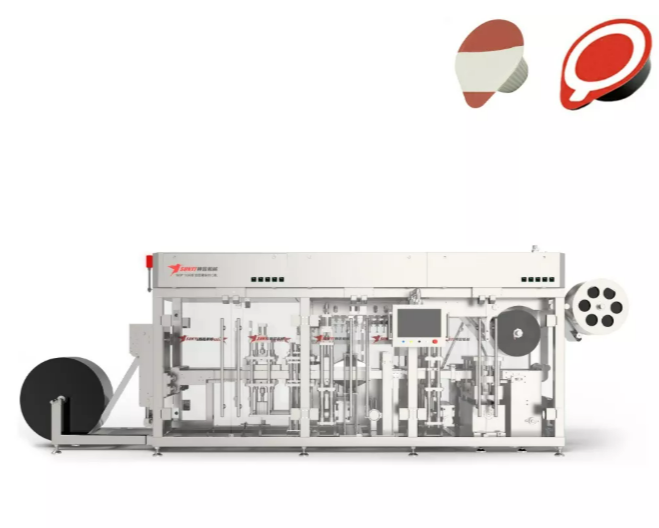
Selecting the right filling sealing machine is crucial for ensuring smooth production and high-quality packaging. Several factors come into play, helping you pick a machine that fits your product, container, and business needs.
First, consider the product's nature. Is it a thin liquid like water or juice? Or is it thick, like cream or syrup? Viscosity affects the machine type. For example, piston fillers work well for thick or creamy products, while gravity fillers suit free-flowing liquids.
Next, think about the container. Are you filling bottles, jars, pouches, or cans? Container shape and material influence machine compatibility. Rigid containers like glass bottles often require vacuum level filling machines to ensure consistent liquid height. Flexible pouches might need specialized sealing capabilities.
Also, container size matters. Small bottles need precise, small-volume filling, while larger containers require machines that handle bigger volumes efficiently. Matching machine capacity to container size avoids overfilling or slow production.
Decide how automated your process should be. Manual machines are affordable and good for small batches but slow. Semi-automatic machines speed up filling but still need some human involvement. Fully automatic machines offer the highest speed and consistency, ideal for large-scale production.
Integration with other systems is another factor. Some machines link easily to capping, labeling, or conveyor systems, creating a seamless production line. This reduces manual handling and boosts efficiency.
Automation level also impacts operator training and maintenance needs. Fully automated machines might require skilled technicians but can save labor costs long-term.
Budget is always a key consideration. High-end machines cost more upfront but offer faster production, less waste, and lower labor costs. Cheaper machines might suit startups or small operations but could limit growth.
Evaluate the machine's return on investment (ROI). Consider factors like production speed, accuracy, maintenance costs, and how long the machine will last. Sometimes spending more initially pays off through higher efficiency and product quality.
Look for machines with adjustable settings to handle different products or container sizes. This flexibility adds value and future-proofs your investment.
As industries evolve, filling sealing machines are becoming smarter, faster, and more sustainable. These innovations aim to boost productivity, improve accuracy, and reduce environmental impact. Let’s explore the key trends shaping the future of filling sealing technology.
Automation continues to transform filling sealing machines by minimizing manual intervention. Advanced robotic arms now handle container positioning, filling, capping, and sealing with high precision. This reduces human error and accelerates production speed. For example, robotic systems can manage delicate containers or irregular shapes better than conventional machines, ensuring consistent quality.
Robots also enable flexible manufacturing lines. They can quickly switch between different container sizes or product types, helping businesses respond swiftly to market demands. Collaborative robots (cobots) work alongside human operators, enhancing safety and efficiency without requiring full automation.
Smart filling sealing machines incorporate sensors, IoT connectivity, and AI algorithms to optimize operations. Real-time monitoring detects issues such as leaks, underfilling, or equipment malfunctions, allowing immediate corrective actions. This reduces downtime and product waste.
AI-driven analytics predict maintenance needs, extending machine life and preventing unexpected failures. Machine learning models analyze production data to fine-tune filling parameters, improving accuracy for varying product viscosities or container types. For instance, AI can adjust fill speed dynamically when switching from thin liquids to thicker creams, maintaining consistency.
Furthermore, smart machines can integrate seamlessly into Industry 4.0 environments, sharing data with other production systems. This holistic approach enhances traceability, quality control, and supply chain management.
Sustainability is a growing priority in manufacturing. Filling sealing machines are being designed to minimize resource use and waste. Innovations include:
● Precision Filling: Reduces product overfill and spillage, saving materials and lowering costs.
● Energy Efficiency: Machines use energy-saving motors and optimized pneumatic systems to cut power consumption.
● Eco-Friendly Materials: Use of recyclable or biodegradable packaging materials compatible with filling machines.
● Reduced Water Use: Advanced cleaning-in-place (CIP) systems minimize water and chemical usage during sanitation.
● Modular Designs: Allow easy upgrades and repairs, extending equipment lifespan and reducing electronic waste.
These sustainable practices help manufacturers meet environmental regulations and appeal to eco-conscious consumers.
Filling sealing machines are vital in modern manufacturing, ensuring precise, efficient liquid packaging across industries. They boost productivity and maintain product quality, essential for sectors like food, pharmaceuticals, and cosmetics. Future innovations promise smarter, sustainable solutions, enhancing operational efficiency.SUNYI offers advanced filling sealing machines, providing value through cutting-edge technology and reliable performance, meeting diverse production needs. As industries evolve, these machines will continue to play a crucial role in streamlining processes and reducing environmental impact.
A: A filling sealing machine is used to automate the process of accurately filling containers with liquids, ensuring consistency and hygiene in industries like food, pharmaceuticals, and cosmetics.
A: A Liquid Filling Sealing Machine works by dispensing a precise amount of liquid into containers, then sealing them to prevent leaks and contamination, enhancing product integrity.
A: Choosing a Liquid Filling Sealing Machine boosts production efficiency, maintains product quality, and reduces labor costs through automation and precise filling.
A: Benefits include increased production efficiency, consistent filling accuracy, reduced labor costs, and enhanced product quality and safety.
A: Volumetric filling machines measure liquid by volume for precise dosing, while vacuum level filling machines fill based on liquid height, ensuring uniform appearance.


